
Zisis Kardianos
Gyorgy Laszlo:
2020 and 2021 are / were / will continue to be, to say the least, ‘strange’ years. Covid-19 has divided us into sick and healthy. It has forced most of us for shorter or longer periods of time into a public health and a social quarantine. There are those of us, who have savings, can work from home, have a relatively stable internet connection and living quarters that offer privacy. There are those of us, who have no savings, cannot work from home, have slow internet and cannot escape the presence of loved or not-so-loved ones.
It’s a trauma that we deal with (or don’t) like with any other trauma. Photographers have to come to terms with increased social distances, empty urban spaces, human figures who have face masks instead of faces.
Zisis, how has the pandemic changed you (if you can already feel a change)?
Zisis Kardianos:
Just before the pandemic erupted I had a very grave health issue and my life was practically in danger having to undergo a very serious surgery. I recovered from that experience more appreciative of my life in general and all the little moments that I can savour with my family and friends. So when the pandemic hit us, I was in a way prepared to face it and live through it in a more stoic way and make the best of my time alone or with my family during the periods of the extended isolation.
Subject matters ‘available’ to us in 2019 have disappeared, others have come into being. How do you see the change?
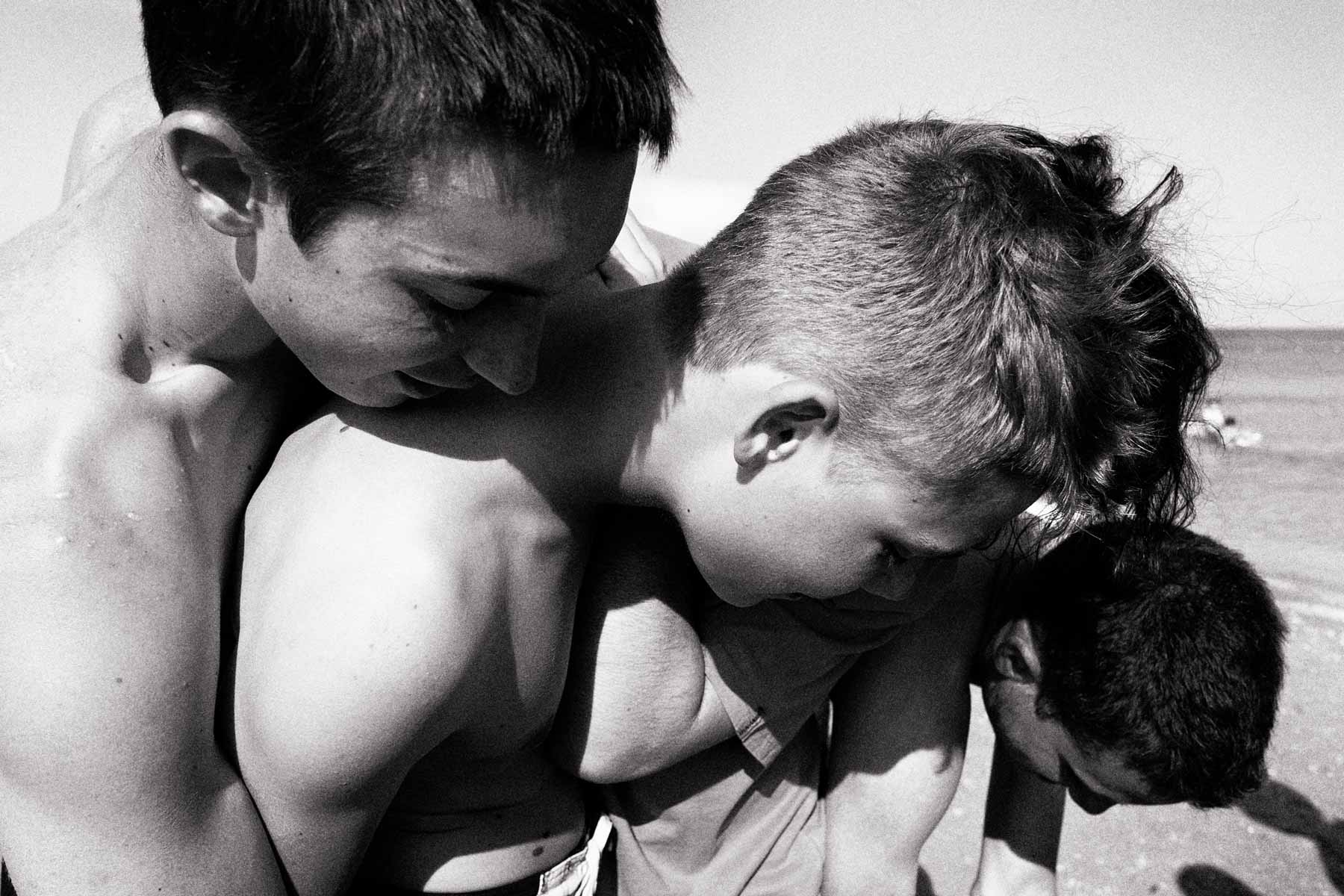
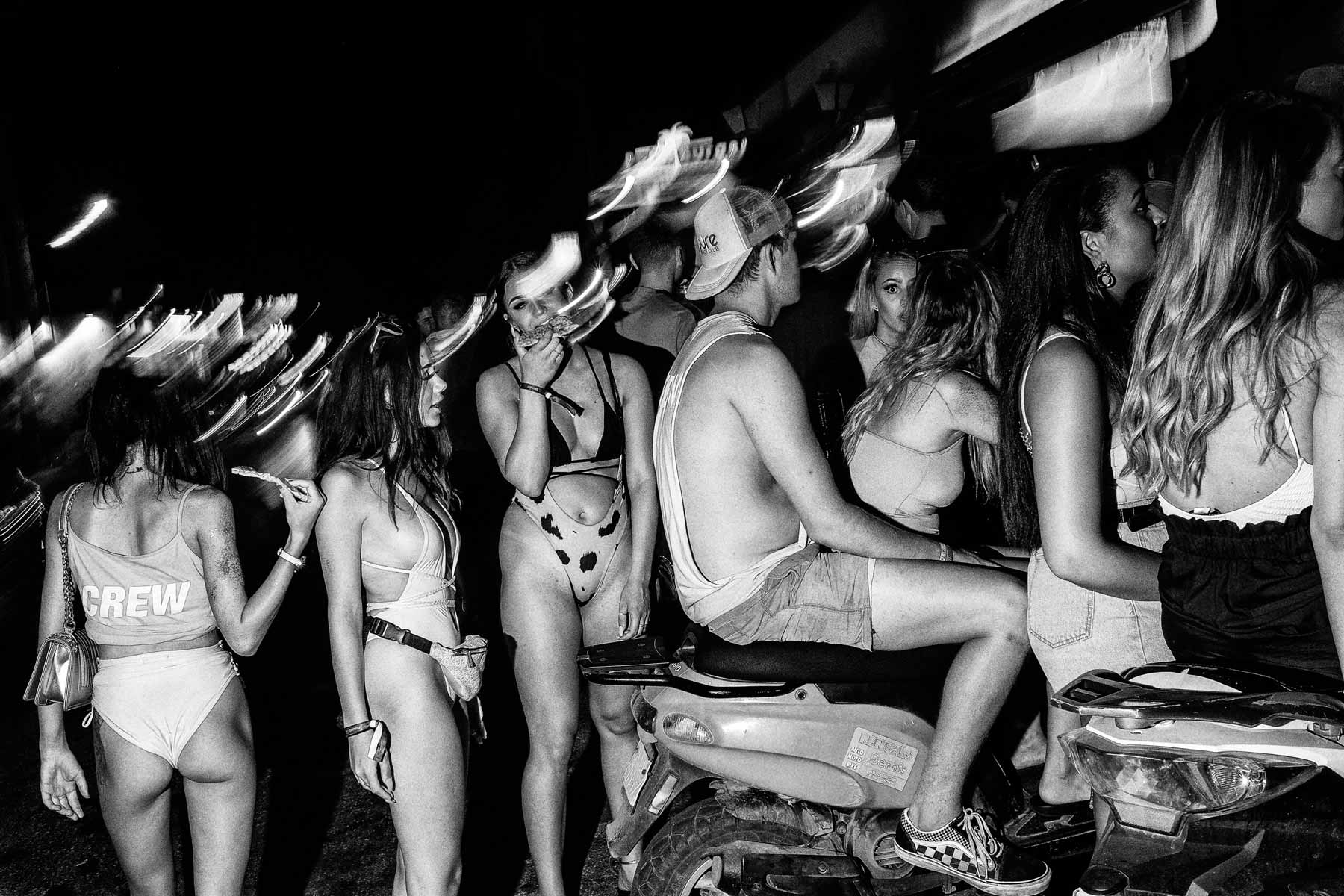
The pandemic had also obviously a profound effect on my photographic output. I could not travel either in Greece or abroad and I could not photograph people in the streets, which is my favourite place to be under normal circumstances. I live in a small town of ten thousand inhabitants on an island, so I never had the chance to be among masses of people for extended periods of time.
Since the beginning of my photographic adventure, I knew that was an issue that I had to come to terms with and still find a way to photograph people in public settings. Somehow I think I managed that but the pandemic changed the rules of the game entirely. I was never very good at photographing intimate family moments of my kids or my wife and in general I wasn’t good enough at staging situations. During the lockdown I gave it a try but nothing worthwhile came out of that.
When did you start your Lockdown Escapes series? Was it just an act of ‘defiance’, that you will keep shooting no matter what?
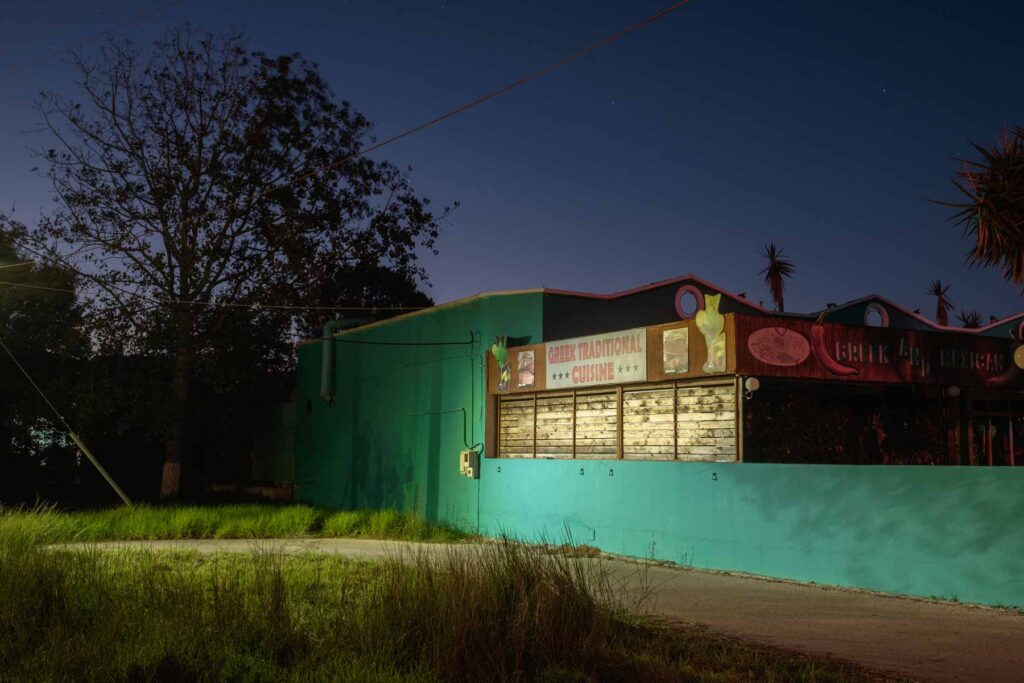
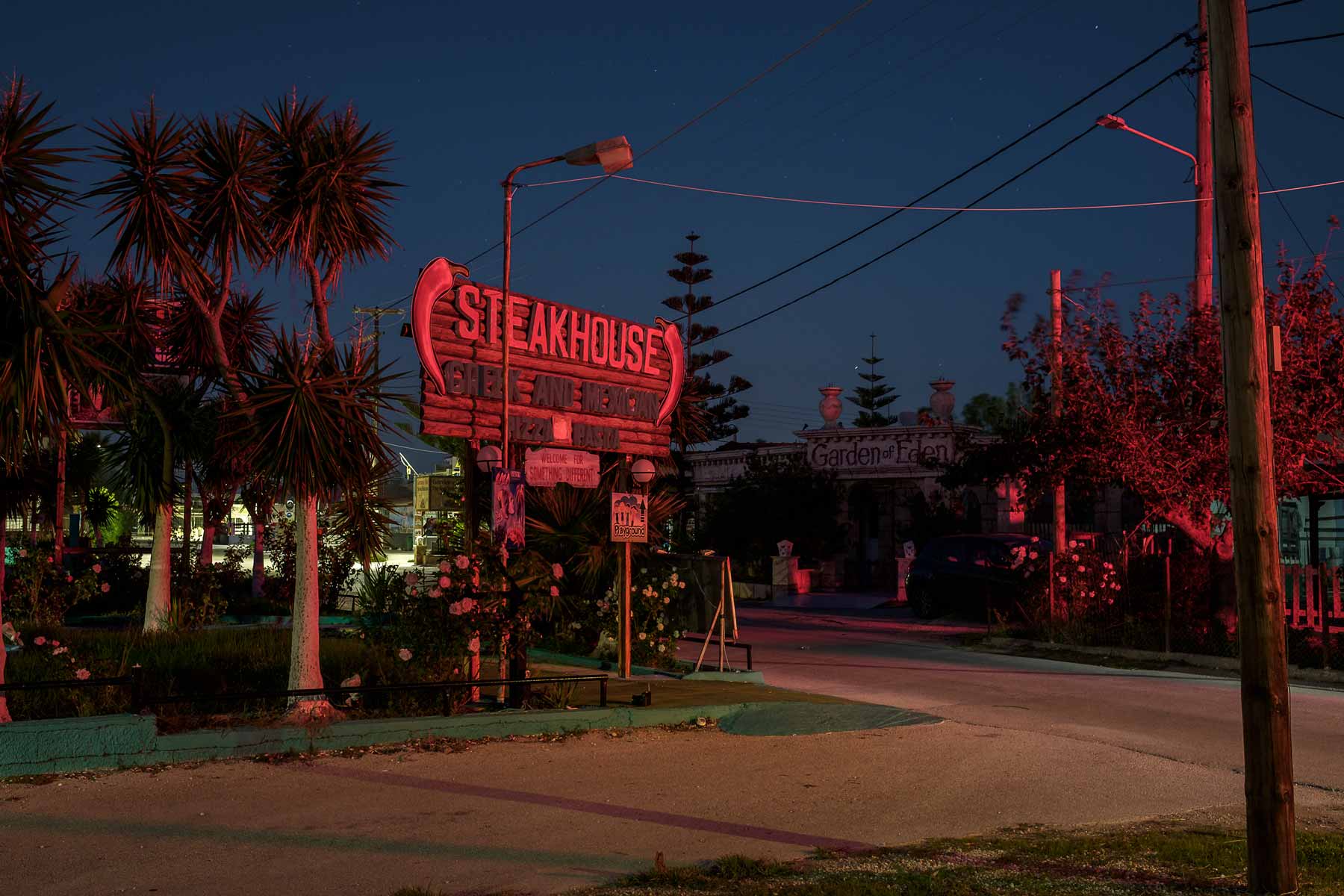
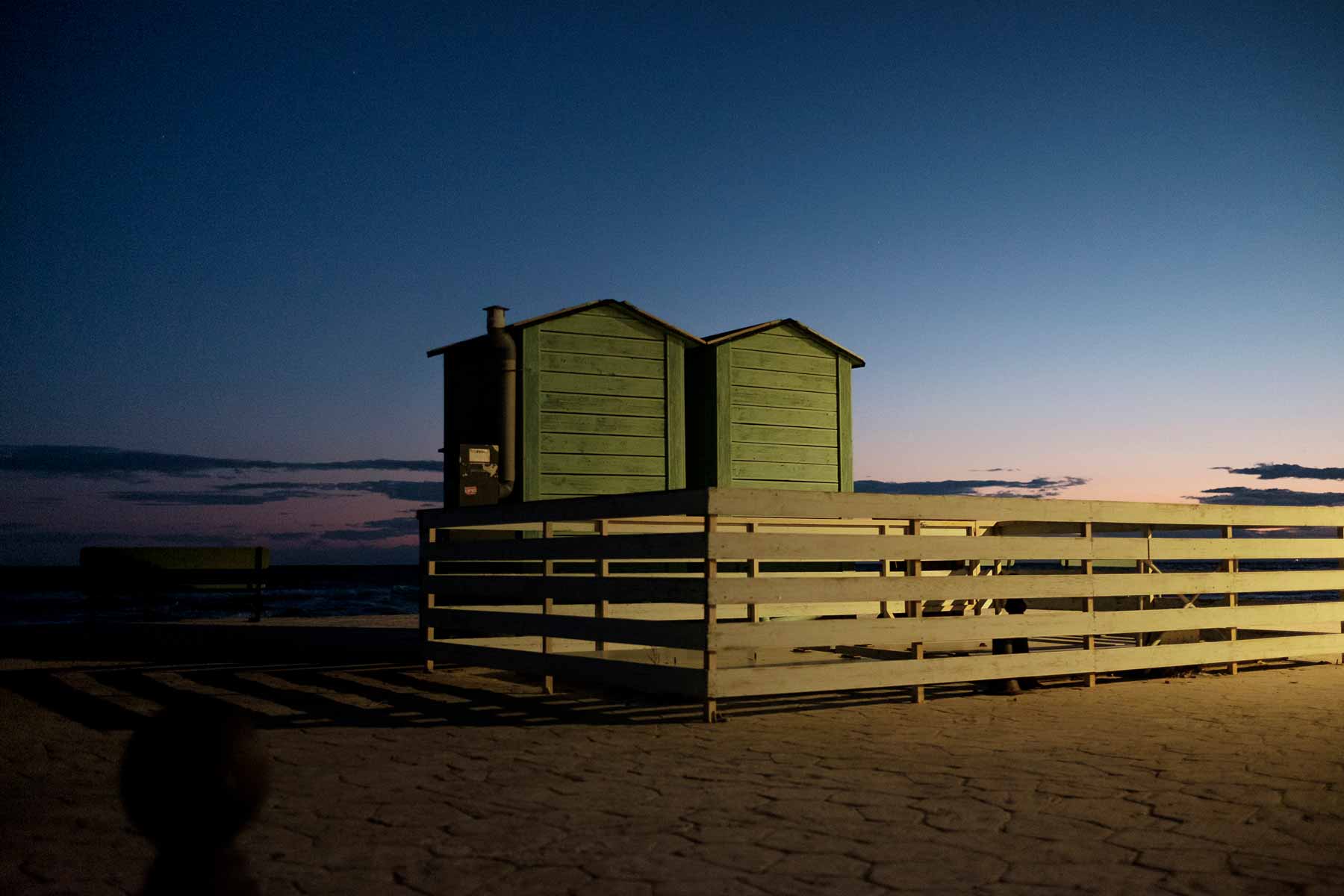
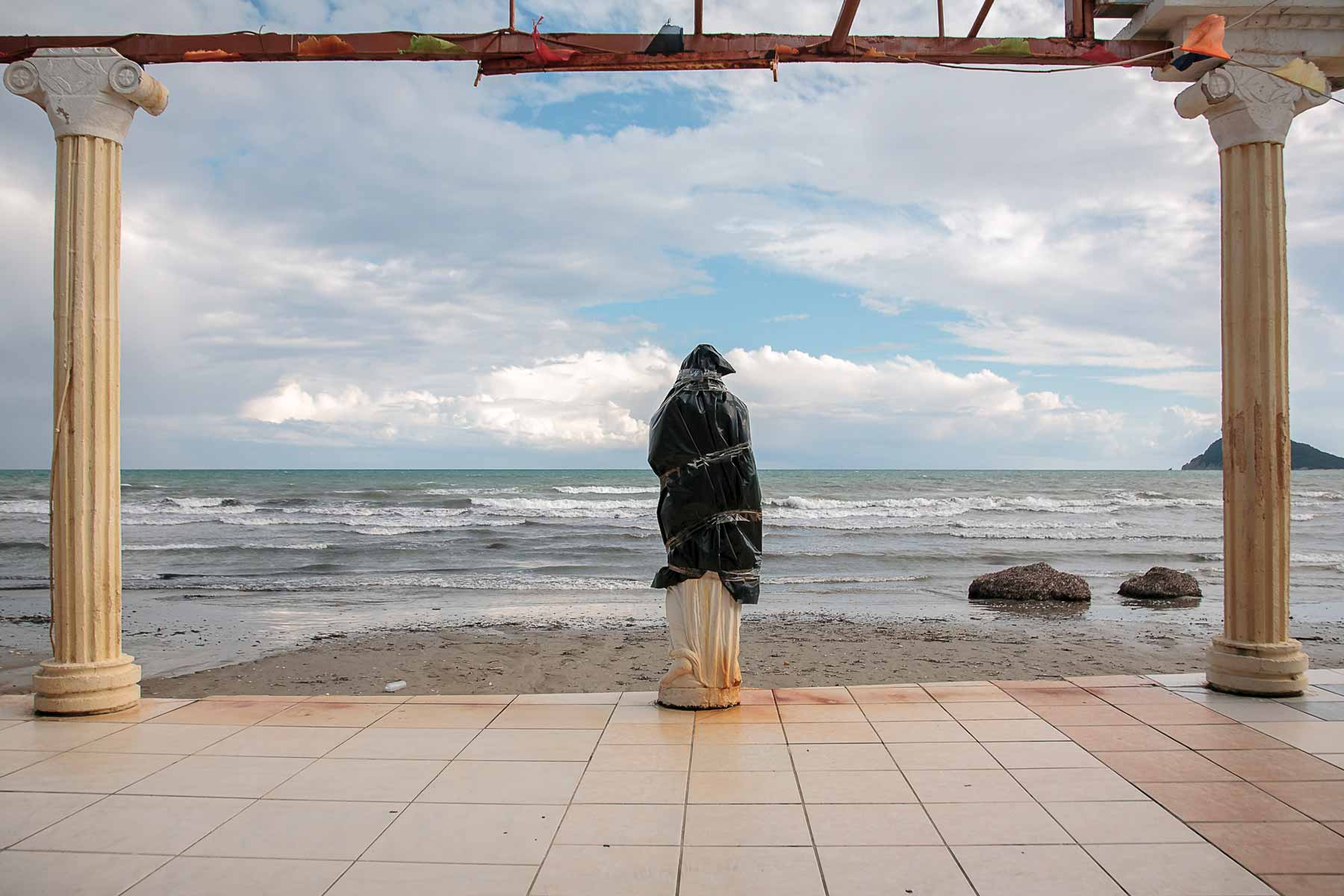
You could say so. It seemed that I only had one option though. To get out of the house with my camera and tripod into the night, sometimes violating the curfew and photograph my surroundings, familiar or unfamiliar places devoid of people in a way that I haven’t done before. Houses, trees, odd constructions, vernacular architecture, even the most insignificant objects had suddenly acquired a unique importance worthy of my attention.
More specifically I was allured to explore my surrounding silent, motionless world in the still of the night. “Lockdown Escapes” presents mundane landscapes photographed after the sun had disappeared over the horizon, now rendered in subdued, dusky tones that suggest both presence and absence, and the weight of isolation.
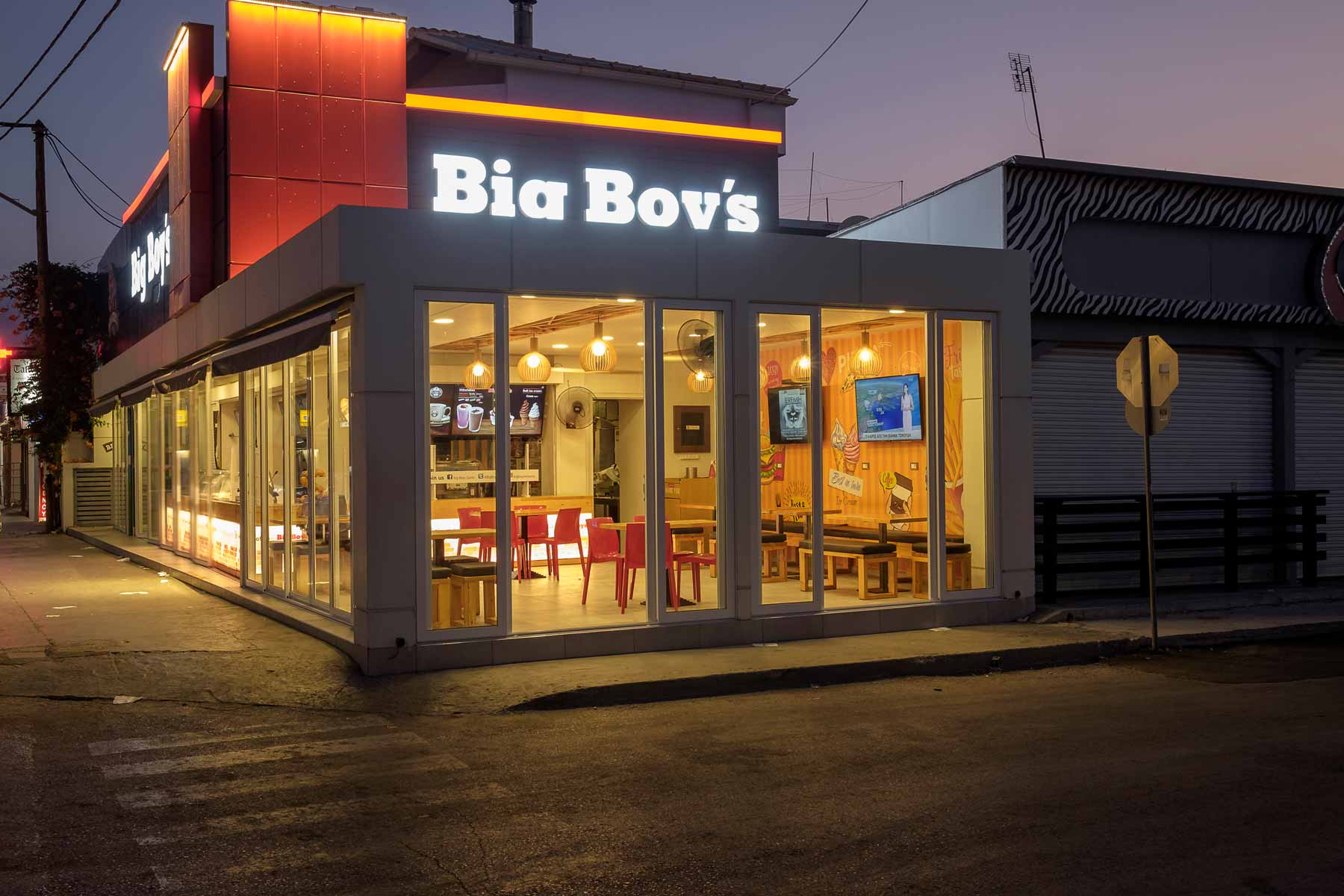
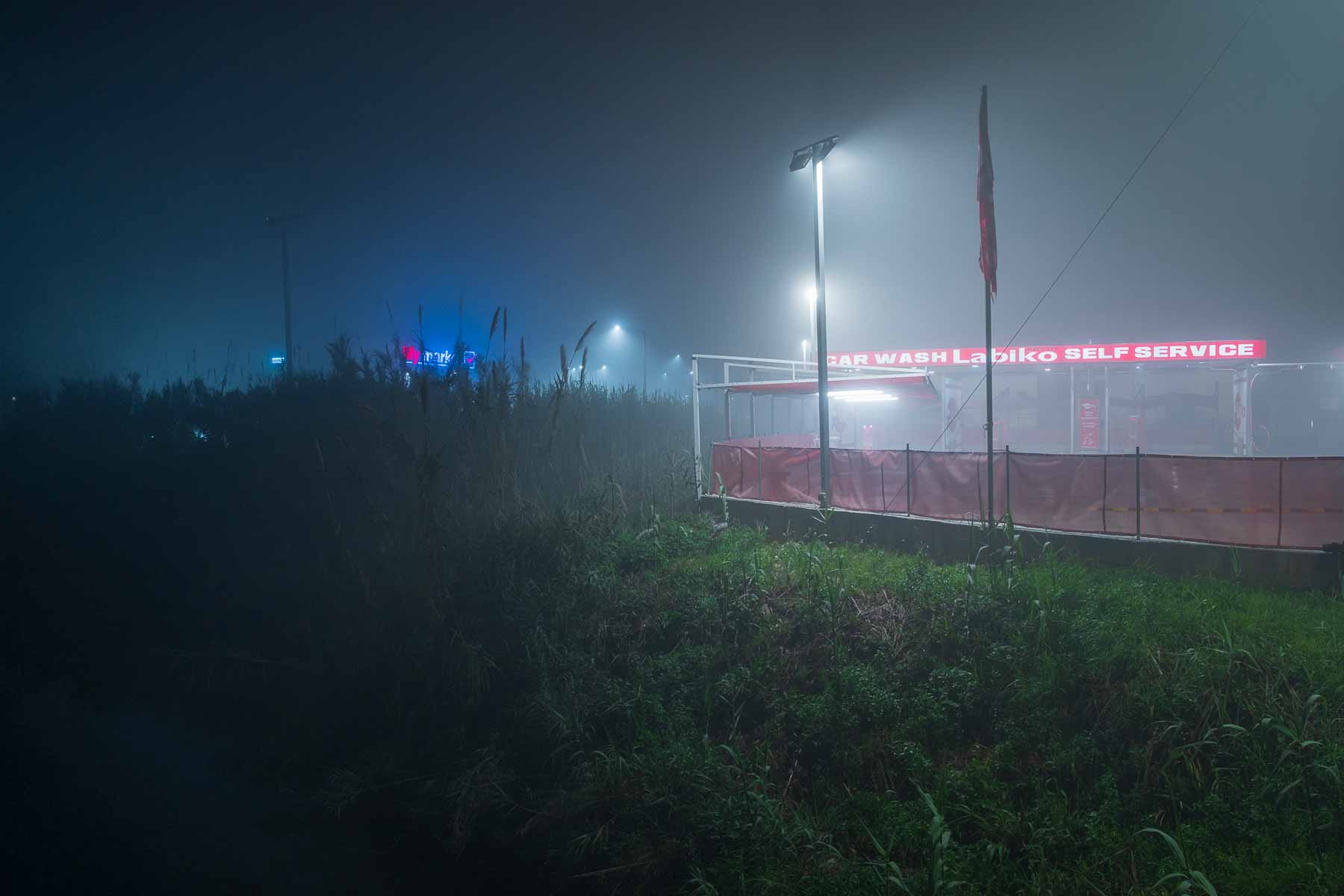
The series is in colour and most of the photos are taken at dusk or at night. Let me start with two dumb, ‘negative’ questions: why not black-and-white and why not film?
There are a few film photographs as well, not many made it to the final cut which is not really final yet since the series is ongoing. The funny thing is that the making of this project coincided with my more ardent engagement with the analogue practice since I stopped using film back in the late ‘90s.
Last year I bought several 35mm and medium format cameras and I filled a whole cabinet in my fridge with colour film stock to the utter dismay of my wife. I had decided to shoot the project in colour on 120 film but most of the results were rather disappointing, a fact that made worse by my dependence back then on various labs for the development and the scanning. Later, when I bought a cheap flatbed scanner and started developing myself things improved drastically but I had already jumped ship at least for the specific project.
Let’s be honest about it. Digital with a pro-level camera is not only easier and more forgiving but the results are also as good if not better than film. It’s also time saving and infinitely cheaper. In the beginning I was attached to black and white perhaps for the wrong reasons but in the last years I made an almost complete u-turn to colour accepting its formal difficulties as an extra challenge. I don’t look down at b&w and I still use it from time to time and I appreciate the work of those before us all the same.
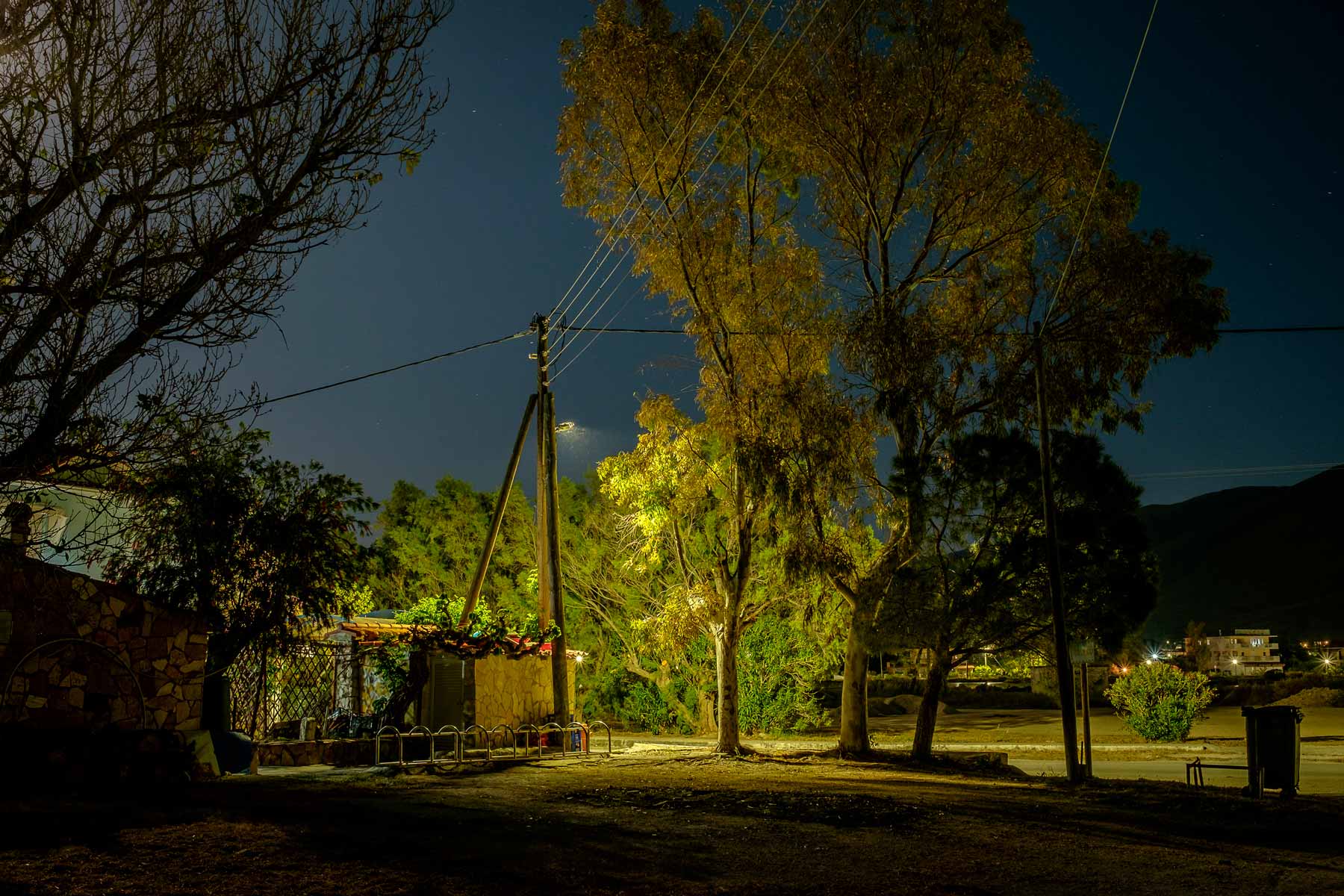
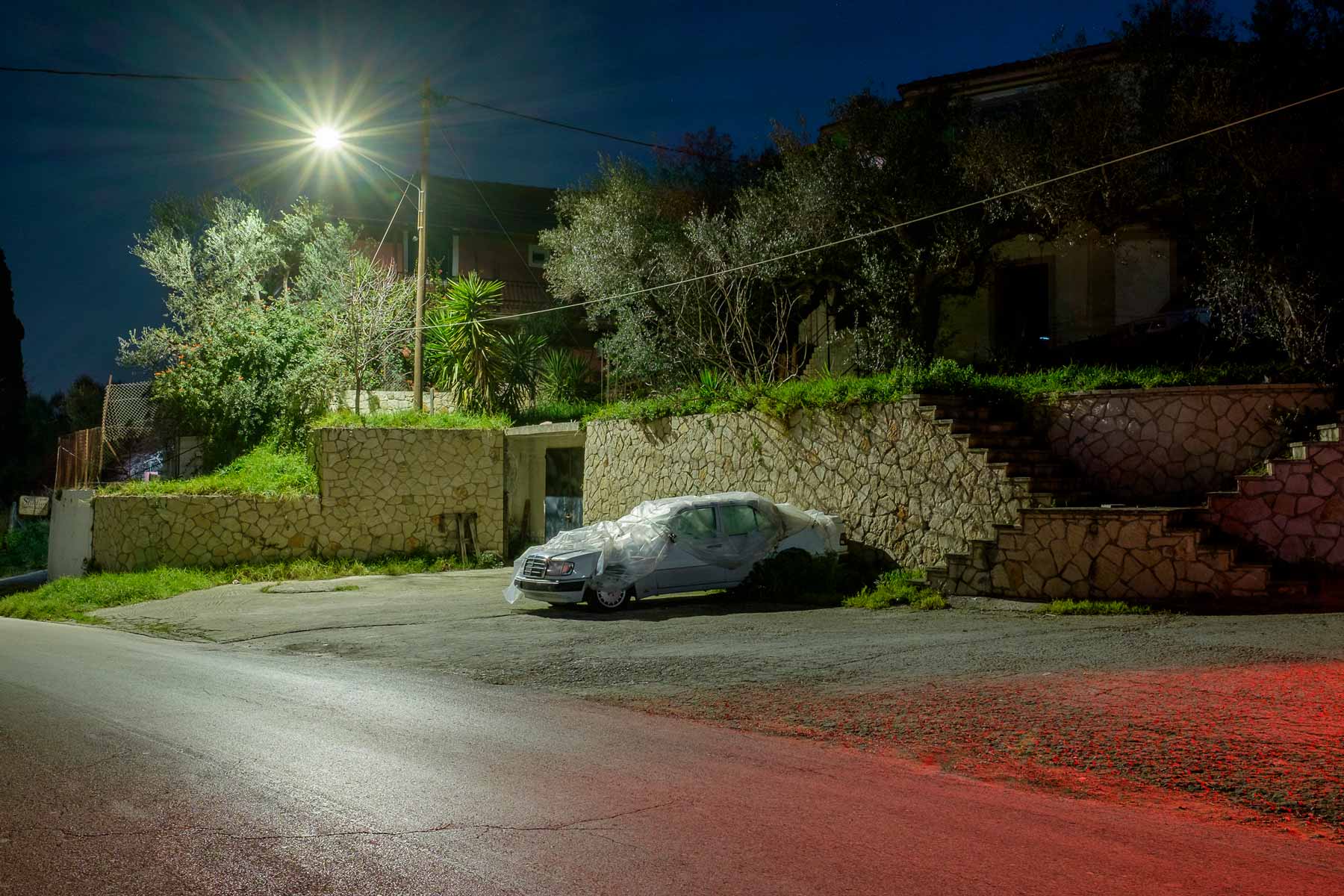
The greatest conceptual and practical problem that I see with lockdown-related is that the visual medium has great difficulty telling a story of what’s not on the image. When we are trying to show what’s not there, what’s missing.
I think this is the virtue of photography, what makes it unique among the visual arts. We rely on outside reality, on what we see. At the same time there is always, or rather should be, a deeper layer which is not readily visible and the photographer or the viewer can sense it in a different way or not sense it at all. The meaning of art in general and not just of photography is the result of the tension between the descriptive and the abstract.
On a more technical level, could you just briefly describe your setup for the series?
The whole series was practically made with two cameras and one lens. I bought a used Fujifilm X-T1 back in 2015 when I sold all my Canon equipment; until then I was using the Canon 5D Mark I. With it I bought the 23mm f/1.4 prime which is a great all around lens and served me well all these years for my street work and the night landscapes. I have upgraded my camera only recently to a used X-T3 with the kit lens.
I usually photograph in a more relaxed and casual manner, handheld, quick, responsive, off-camera flash on hand. But for this series I went for a more deliberate approach and since I wanted the best possible image quality and sharpness, the use of a tripod was indispensable. It allowed me to use the lowest ISO, closed-down apertures and long shutter speeds but never more than a minute since there was always some ambient light to brighten the scene a little.
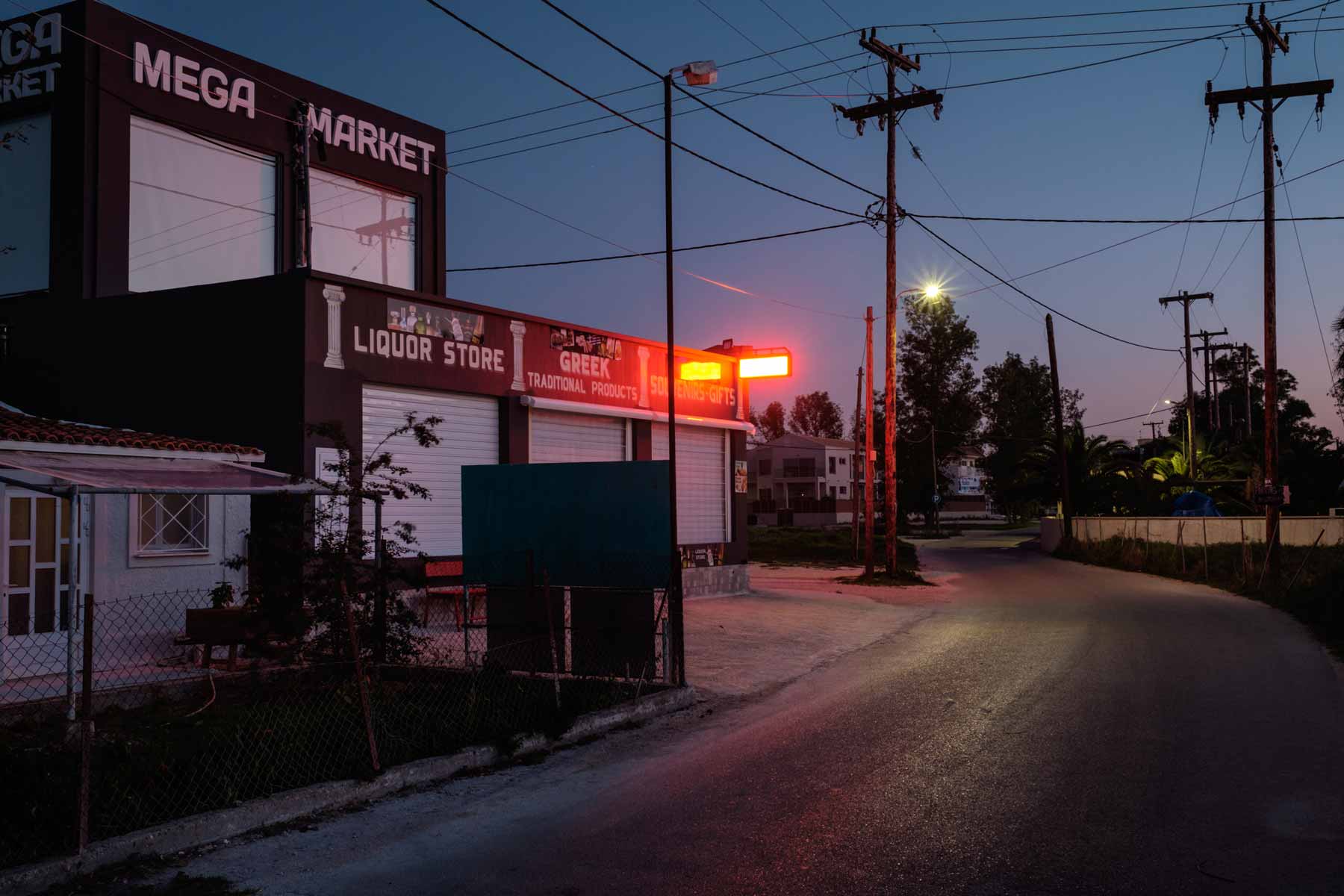
Could you tell me about how the ‘Mega Market’ photo was born? What attracted you to the composition? The red/orange glow of the light on the store?
I’m always looking for scenes like that, scenes that combine the artificial light with the ambient light of the early evening. In that case, it wasn’t only the neon sign that we see in the picture but the neon sign from a closed restaurant on the opposite corner that was radiating a red glow towards the shop. I choose to work during clear nights with plenty of moonlight because it renders the landscape with such an uncanny but at the same time soothing feel.
From the file names (again) it seems that you’re a Fujifilm X person. (So am I.) Any particular reason(s)? Body design? Image quality?
I switched to Fuji from Canon because I was no longer pleased with the results of the 12MP sensor and the Canon colours always seemed to me a bit off and on the hard side to master. Camera and lens weight was also a reason, especially when it comes to street and the many hours of aimlessly walking around.
The Fuji retro design obviously appealed to me, I’m a fetishist by nature, and specifically that of the X-T1 even though I must admit that I’m using the top plate buttons and dials less and less and I find the command dials quicker to change settings on the fly. Also factor in the fact that with a lightweight mirrorless camera it would have been much easier to hold the flash on my left hand and the camera with the right.
However, and that might seem ironic and counter-intuitive, I have already decided to get my hands on a DSLR, without abandoning the Fuji system, and this time it’s the behemoth of a camera, the Nikon D800 with its huge and unforgiving 36MP full frame sensor. I want to try this specifically on portrait work and landscapes. When I print, I like to print big!
As a Fujifilm user I naturally love the film profiles. I have my favourites that I shoot with (lately it’s been mostly Acros with a red filter) but as I shoot RAW I sometimes find that a different profile brings out what I am after more. How do you feel about the editing process? Do you jump freely back and forth between Fuji ‘stocks’?
Despite the praise that the Fuji JPEGs get with the in-camera processing, I find the results vastly inferior compared to what you can get with a more deliberate RAW editing. I use the Fuji simulations as a starting point to my editing trying a couple of different sims that I have come to trust/like more.
For daytime landscape pictures is the Classic Chrome and for the nighttime landscapes is the ProNegative Standard because of its wider dynamic range. Then I adjust white balance and exposure. I avoid overt colour saturation and I hardly ever use the Clarity slider. I’m more accustomed to the ACR environment even though the sharpening that the ACR applies can be problematic. I keep the Details slider always at zero to avoid the dreadful worm effect.
I sometimes use the Capture One Fuji Express editor if I want to apply the Classic Negative sim which I find it has that gritty, filmic look that I like for my street photographs. And yes, I also use the Acros sim with yellow/red filters if I go for a BnW conversion.
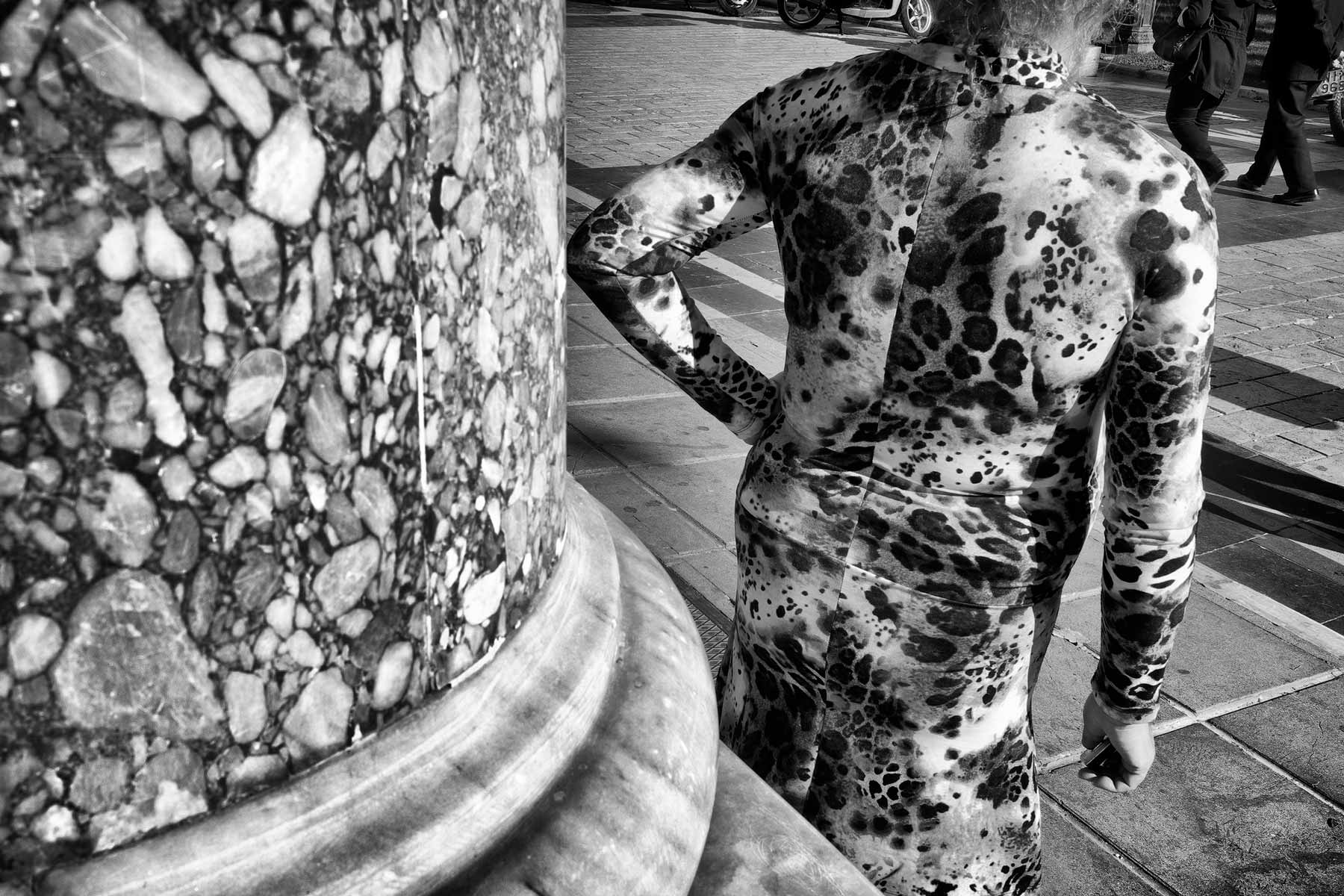
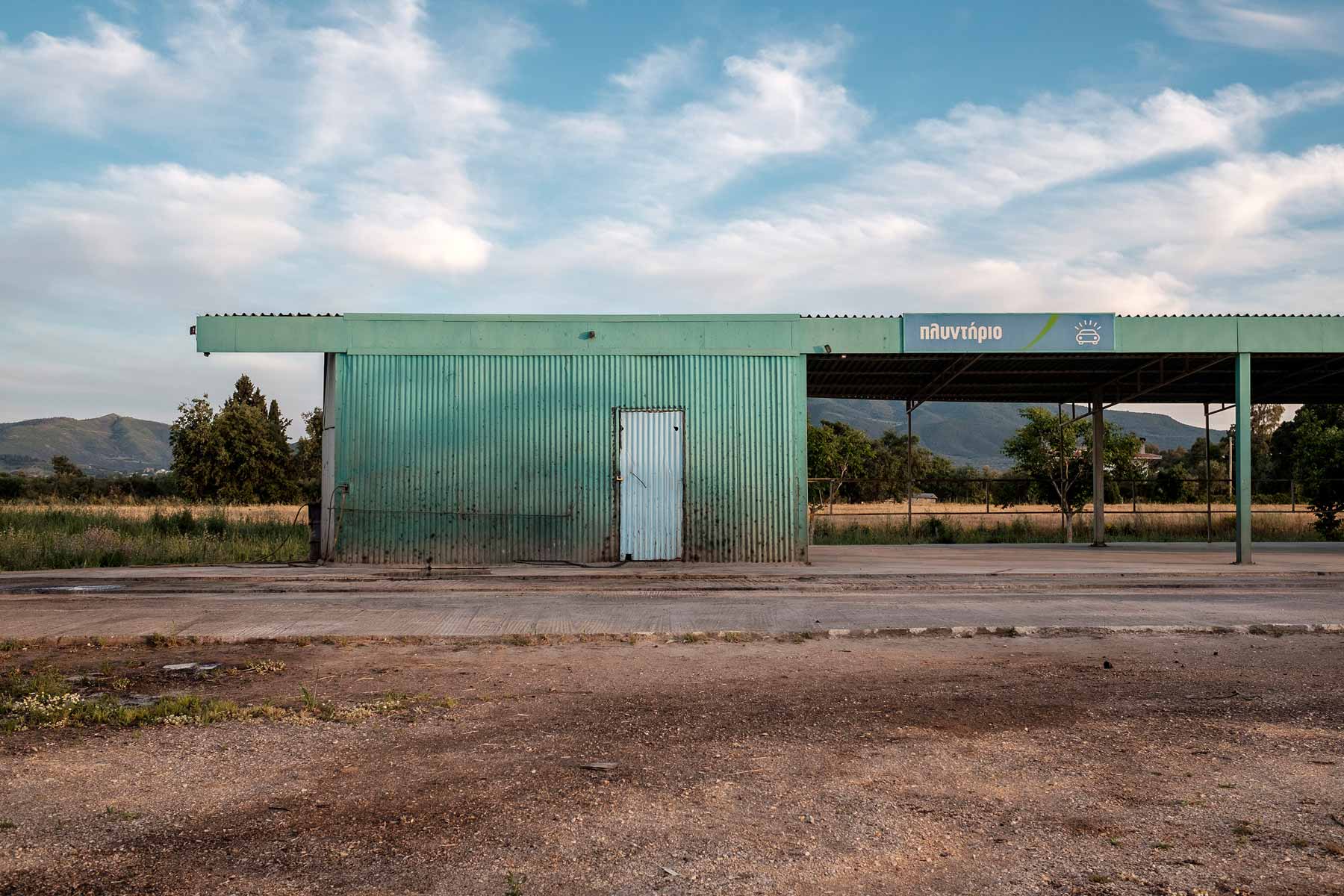
Whether I’m looking at your ‘In Limbo’ or the ‘Sense of Place’ series, you’re obviously a documentary / street photographer. You enjoy going quite or very close to people. How do you think about distance – I mean philosophically and practically?
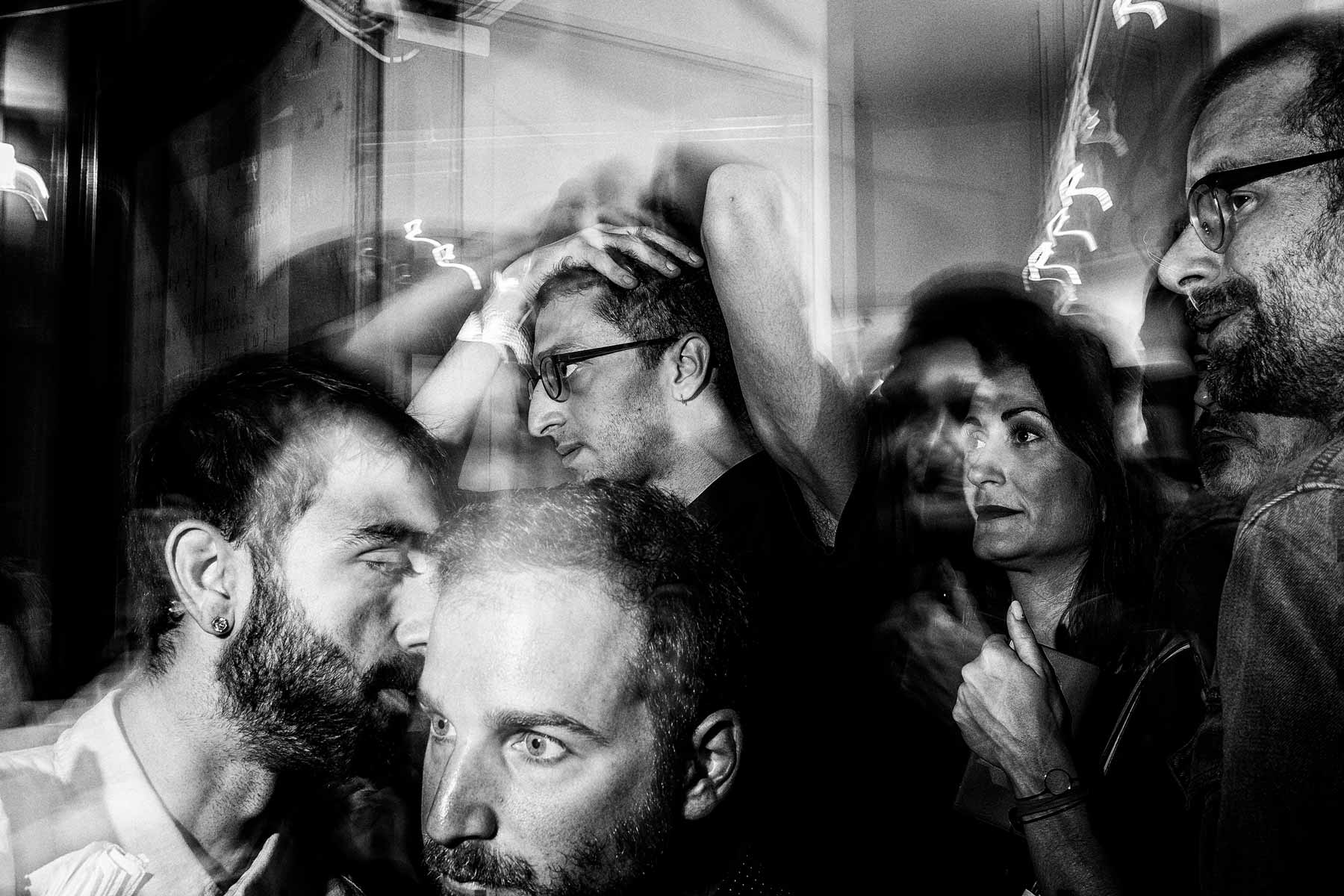
Getting close to my subjects while shooting street photography is an integral aspect of my approach. I also favour medium distances with the 35mm lens, but getting very close, mixing up with the crowds or with a bunch of people while being absorbed in any sort of activity, I have found that gives my photos a more dramatic edge. In situations when this is not possible, I employ different techniques that the Fuji allows me, like placing the camera on a tripod or a close-by table and fire it through the app from some close distance with the wi-fi enabled. Other times I use the flip LCD screen and shoot from the hip. Anything goes as far as I can be close to the action or my subject.
How do you work as a street photographer? How would a street photography day of yours look like from getting up and brushing your teeth to arriving back home?
There’s been some time since I was doing that in day to day basis. Besides the pandemic restrictions, for various other reasons I wasn’t shooting much street during the last three or so years. But I haven’t given up on street photography and is the first thing I’m going to do when I’ll be able to travel again. This time I have a specific project in mind, as I had plenty of time to explore different ideas mentally. It will be classic street whatever that means with a conceptual twist that will address and challenge the notion of the decisive moment.
Usually I pick ahead a time of the day that will suit to my particular plan, either early morning or late afternoon, I go to the place and I will walk for about 3-4 hours around the area. I don’t usually stay too long to a fixed place waiting for the picture. If you are waiting for the picture, is like waiting for something that you have already seen or done before.
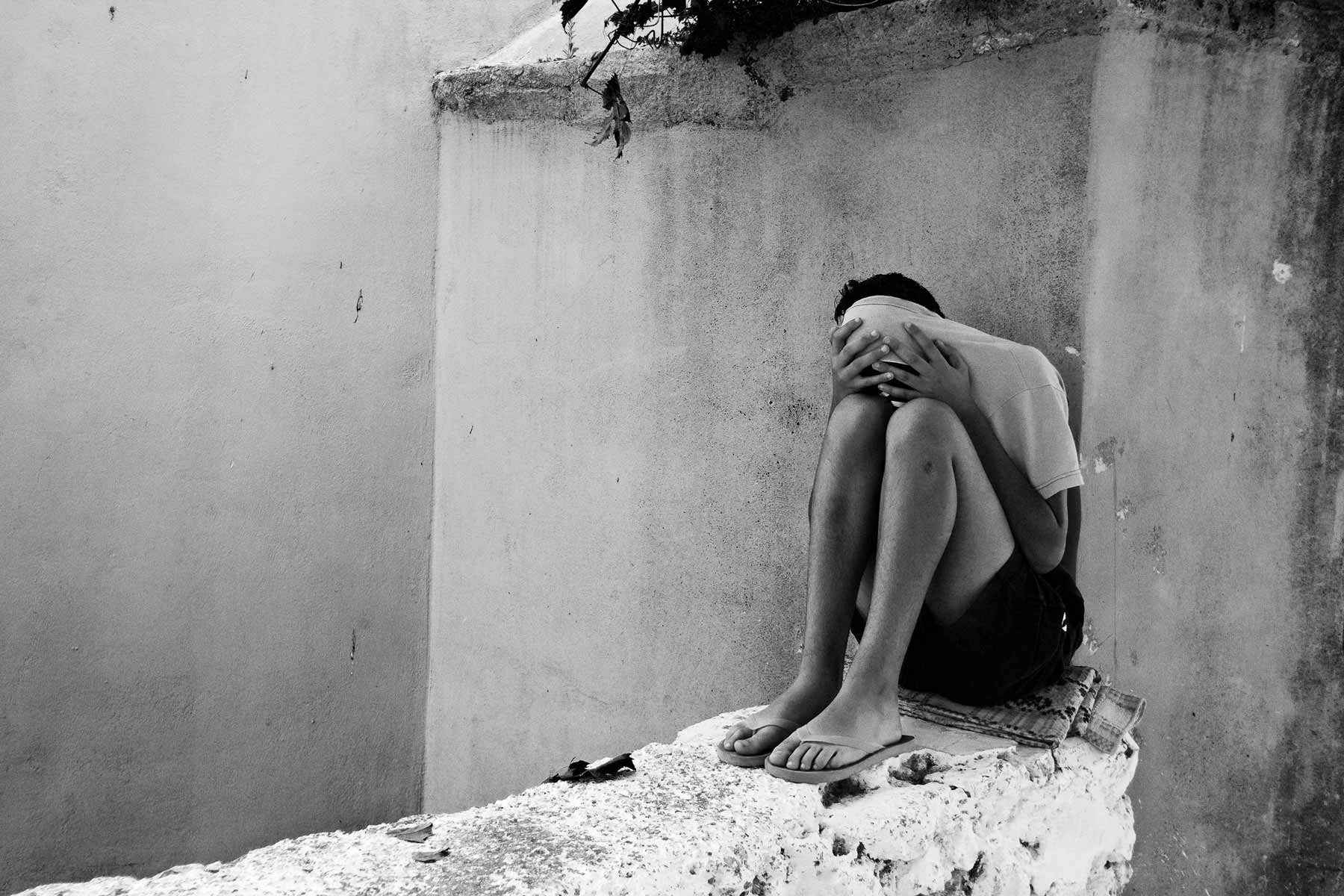
How do you get ready mentally, how much do you plan? What’s your typical gear and your thinking behind picking that particular gear?
My typical gear is the Fuji X-T3, the 23mm prime and my flash and trigger. But if I have something a bit more specific in mind, I may get my medium format 645 or a 35mm camera with a 28mm and 35mm prime. Usually I don’t plan much ahead and not trying to pre-visualize my shots and the range of planning ahead depends on how far I am in a developing project or just trying out the waters for something new.
Street photography is both tiring and exciting. How do you keep yourself motivated?
The urge to go out and make pictures is the greatest motivation. I’m glad that I still have that need. As the years pass, I have found that I cannot be as energetic as I used to be ten years before, that’s why I always explore other directions to my photography. I won’t be able to do street photography with the same zeal for ever and I have come to accept that realisation. What also motivates me is the need to solve visual “problems”.
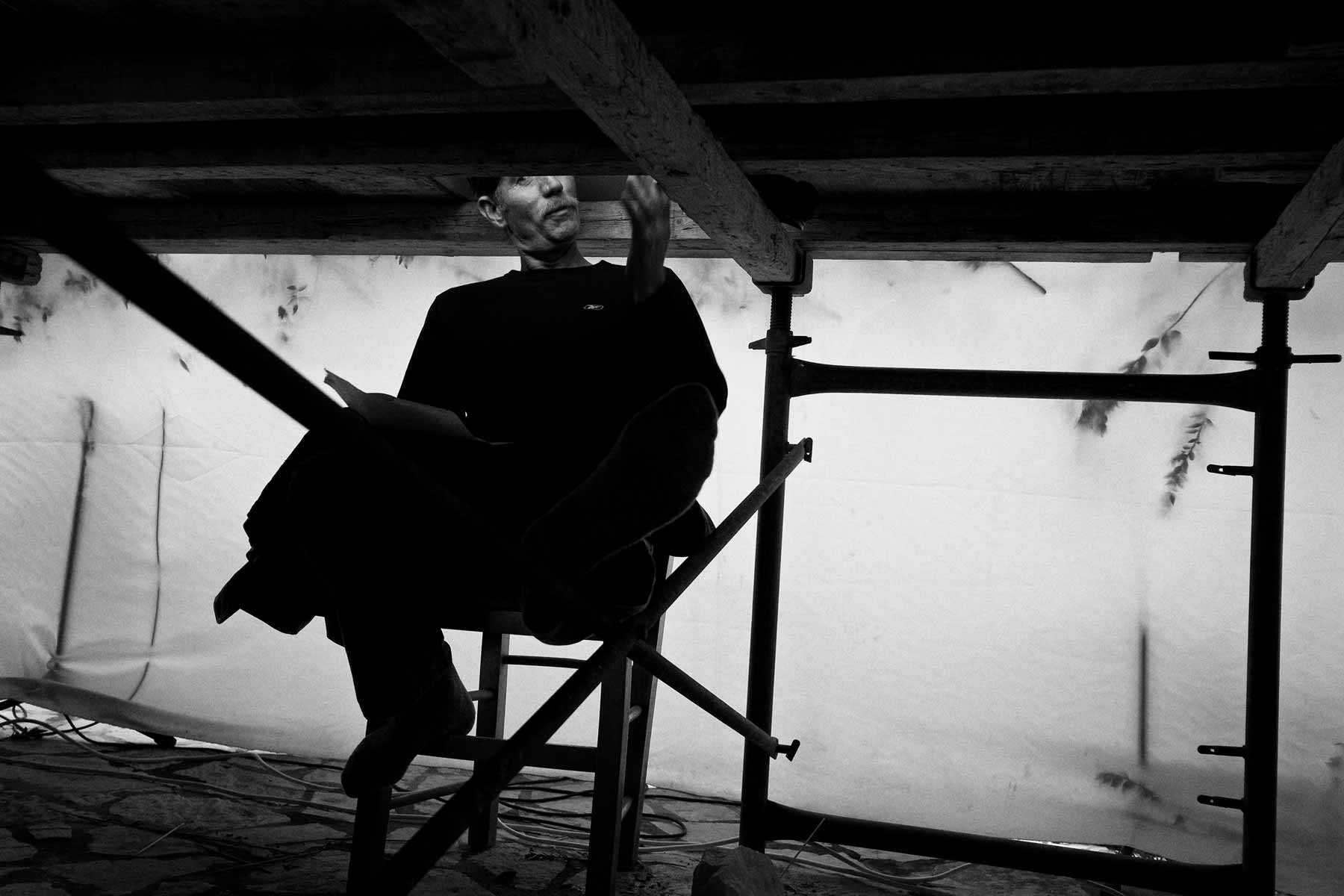
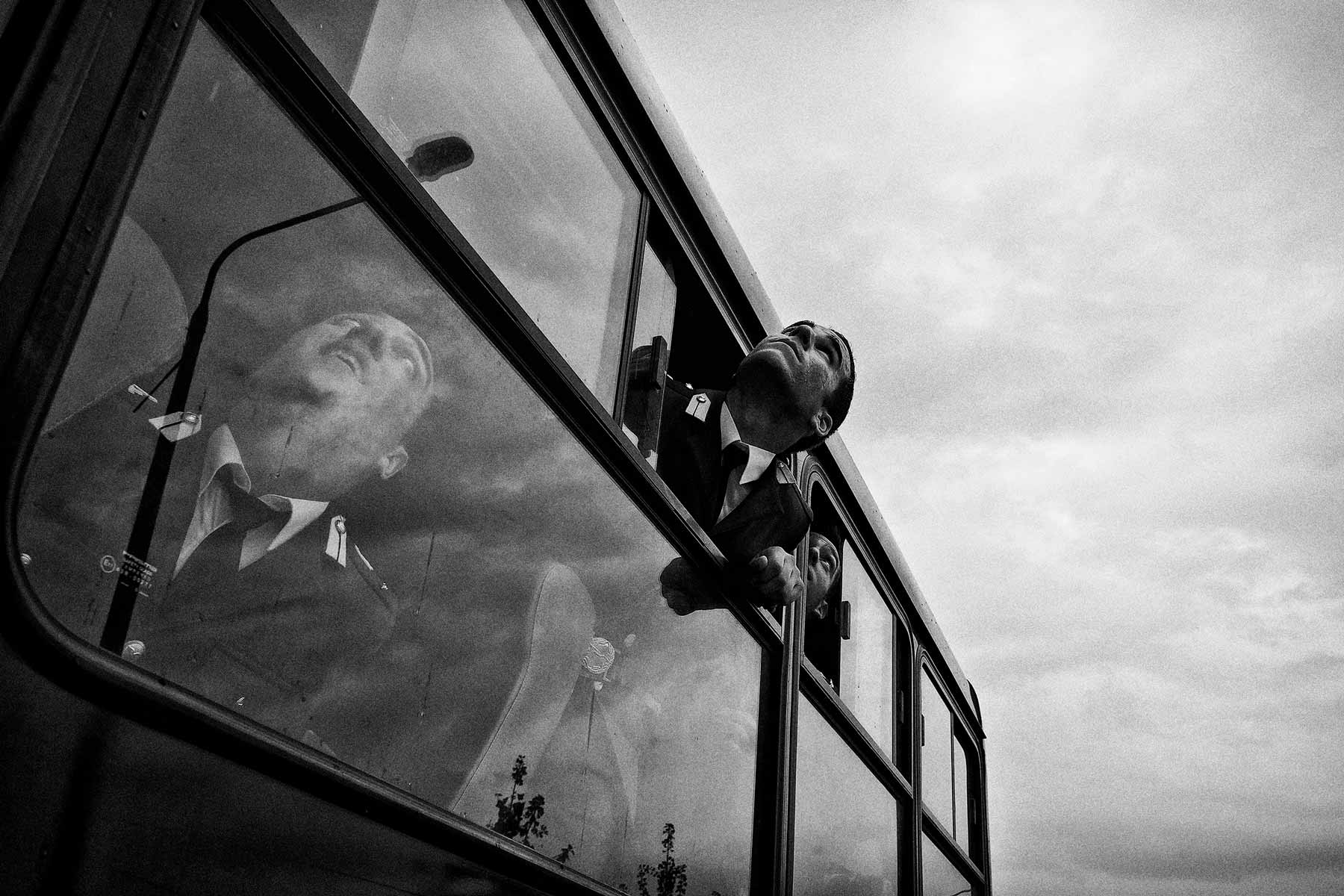
I really like the above black-and-white image of this man who I imagine to be a priest having a side job as a theatre prompter. It’s playful, absurd and it makes no sense – no sense in a good way. Just like the images of the Lockdown Escapes in itself it doesn’t offer a context but it similarly ‘invites me in’ to observe details and try to make sense of it.
This picture was taken during an open air play in one of the villages in the island where I live. As most street photographers I like to explore the edges of an event but that time I went a step further and jumped in under the stage. I have seen the prompter’s head immersing a little from the hole in the stage and my curiosity led me to see how’s like under there. It was kind of magical with the light coming from above through the hole and very interesting visually. He saw me obviously and let me do my thing as he was busy speaking the lines to the actors. I shot a few frames from different angles and this is the one I finally chose. Formally is a sort of environmental portrait even though I’m not interested in the portrait but in the person as part of the overall picture. I had with me the Canon 5D with a 17-35mm, no flash.
On the Burn My Eye site you write: “I work in a quasi-documentary style and the realities that I caption with my camera are mostly invented.” What do you mean by “invented” realities? Are you referring to the reality created by images interacting with each other in a series?
This is in part true. Putting a series together, sequencing the images one after the other or placing them as pairs on a book spread, you try to make a visual narrative that might or might not have any direct relation to what was actually happening. In a more general sense, the formal idiom is documentary but as a visual artist I’m trying to transform the visible into metaphors of my own narrative.
Photography is semiology – the reading of signs – and as such tied to a kind of literary decoding. Like poetry, photography doesn’t tell a story, but provides some cues by virtue of the image, which then in some strange way still forms a narrative in the viewer

How do you feel about publishing your images on social media?
I have embraced the use of social media in order to disseminate my images to a wider audience but I’m not too methodical in trying to build a brand name. After all I believe that the diversity of my work is maybe seen as an obstacle to establishing a recognisable brand or style. I’m okay with that. The problematic ways of seeing the images on social media, unconnected, out of context and technically poor, makes the presentation of the work as separate series or projects in book form or a portfolio of prints even more imperative and I enjoy very much the whole process.
Slideshow of Zisis’ Photos
György is a cinematographer running ExposureWorks and teaching 1-to-1 video and photography courses in the UK. To book a class or for more information browse the courses on ExposureWorks.