
Sara Sallam
Gyorgy Laszlo:
Whenever people experience a traumatic event time splits into a ‘before’ and an ‘after’. In our lives there is already a pre-Covid and a post-Covid time. Its meaning will depend greatly on how it affected us. Sick or healthy? Able to work from home or having to go work? Enjoying relatively fast internet speeds or suffering from a lack of connectivity? Able to find privacy and moments of solitary escape where you live or being stuck with the same people for months?
To start with a non-photographic question, how have you been this past year? Where have you spent it? And most importantly, how?
Sara Sallam:
A couple of months before the lockdown began in the Netherlands, I had just kickstarted an endeavour to self-publish my existing projects in a series of handmade books. When we went into quarantine, I took it as a challenge to stay productive and stick to my plans as a way of staying sane throughout the ongoing pandemic. So I have spent 2020 in Delft, mainly sequencing photographs and binding books.
Subject matters ‘available’ to us in 2019 have disappeared, others have come into being. How has the change affected you?
Usually, I travel back to Egypt in the summer to visit my family and work on new images for my ongoing projects. Of course, with the travel restrictions in place, this was no longer possible. Nostalgic for home, I revisited a project I started a few years back about my search for Egypt outside of Egypt. I reframed it as a tourist handbook for those who can’t travel like me, but can instead visit Egyptian sights across European cities.
Observations Throught My City #1 (2012)
At the beginning of your video documentary series, Observations Through My City, you write: “The ability to observe is not as easy as I thought it would be.”
What have you turned your powers of observation to during the pandemic?
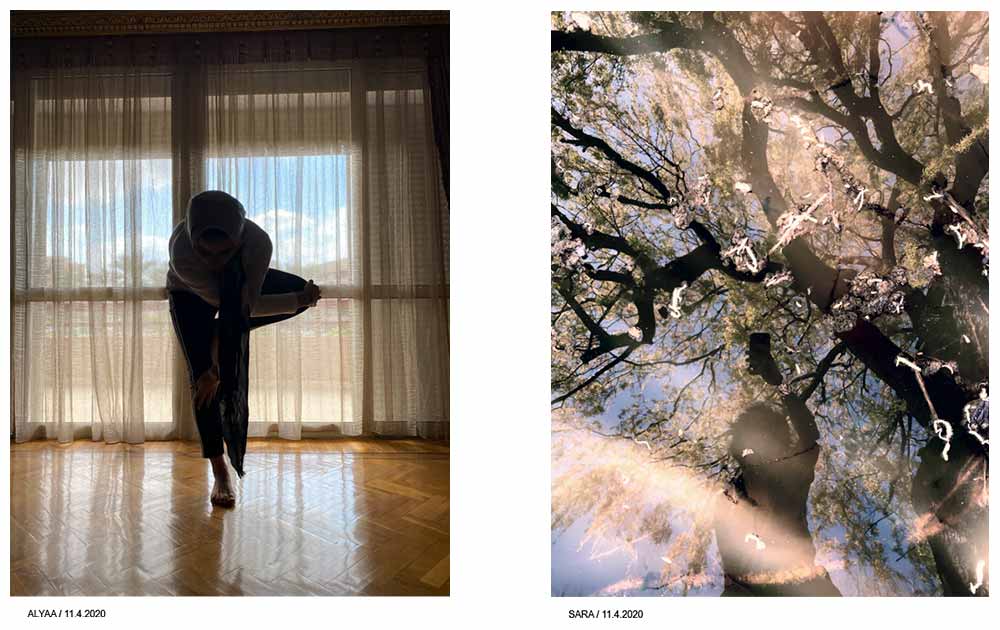
I found myself feeling a need to collaborate and re-kindle these powers of observation. I looked inwardly as I engaged in a photographic dialogue with a friend of mine. We were documenting mundane moments at home and reflecting about being isolated while keeping each other’s company across the distance.
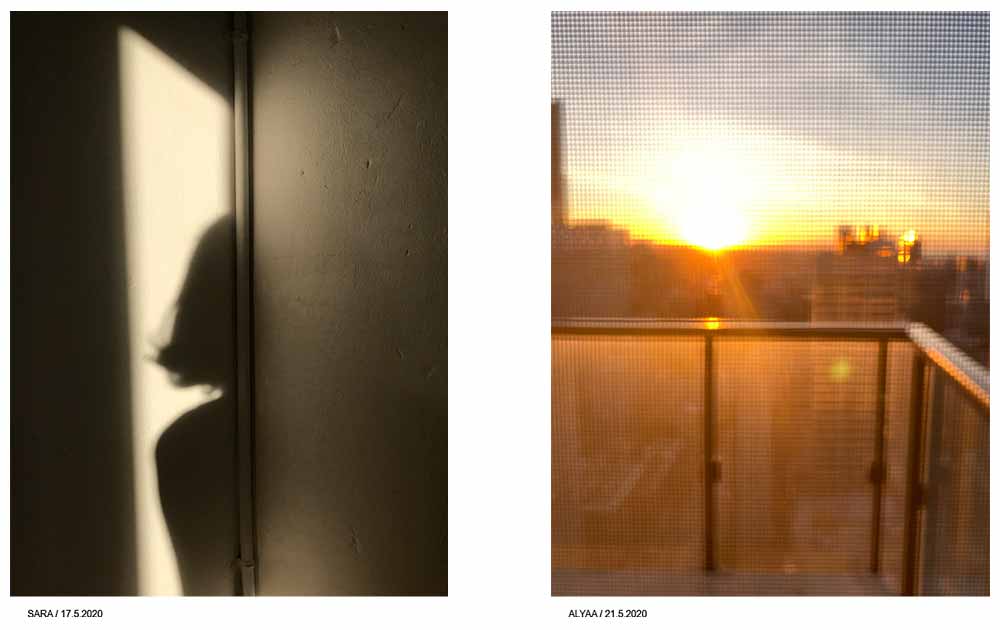
The photographic dialogue with my friend, Alyaa Al Gharby, took place on Instagram. We engaged in a visual conversation where each of us would post a photograph in response to the other’s previous post. Sometimes, we responded thematically. At other times, we were reacting to colours, compositions, and visual cues.
Through our exchange, we documented quiet moments of isolation such as exercising at home, celebrating birthdays alone, travelling in empty airports, and contemplating nature.
I also looked back into the past as I collaborated with my sister. We began investigating our childhood photo-albums, taking the first steps in a larger project about sisterhood. In a way, the pandemic was a catalyst for thought, reflection, and collaboration.
Has observation become easier since 2012? More difficult?
Nine years after making the series ‘Observations Through My City’ observation is definitely still difficult but for different reasons.
Back then, right after the 2011 revolution, there was a general feeling of distrust towards anyone holding a camera in Cairo. It was also my first documentary work. The selectivity of the camera’s view was frustrating as well as the feeling of invading others with my gaze.
Now I engage in a different kind of observation, which is also not as easy as I thought it would be. The challenges I am facing in my current work don’t necessarily revolve around pointing a camera. They are more about seeing what could have been or could be and visualising this potential. I think this change comes from how I now see my projects as visual commentaries with which I seek to provoke critical thoughts and invite questioning the status quo.
“The feeling of invading others with my gaze.” I find this also my fundamental dilemma with street / documentary work. These days I am trying to rephrase this feeling. What we do is not “invasion” but “seeing”. It’s an expression of interest, actually paying attention to another person’s story and emotions. Do you think we live in cultures or a world where even looking and seeing has become an act that you need to ask someone’s permission for?
Indeed, photography is an act of expressing an interest, of saying ‘this is worth seeing.’ The photograph selects the photographed, points at it, and deems it of value. However, it does not stop there. The photograph lives longer than the frozen moment it caught. It can be seen over and over again, extending not only moments of awe and beauty but also of sufferance and violence. It can acquire many meanings depending on its context; in a sequence of images, above a caption, in a newspaper, or a scientific article.
I think, as documentary photographers, we ought to be aware of the specificities of our act of looking. We have a responsibility not only to direct attention towards important issues, not only to acknowledge and see the under-represented. We also have to reduce as much as possible the harm that we may inflict in the process with our photographic gaze.
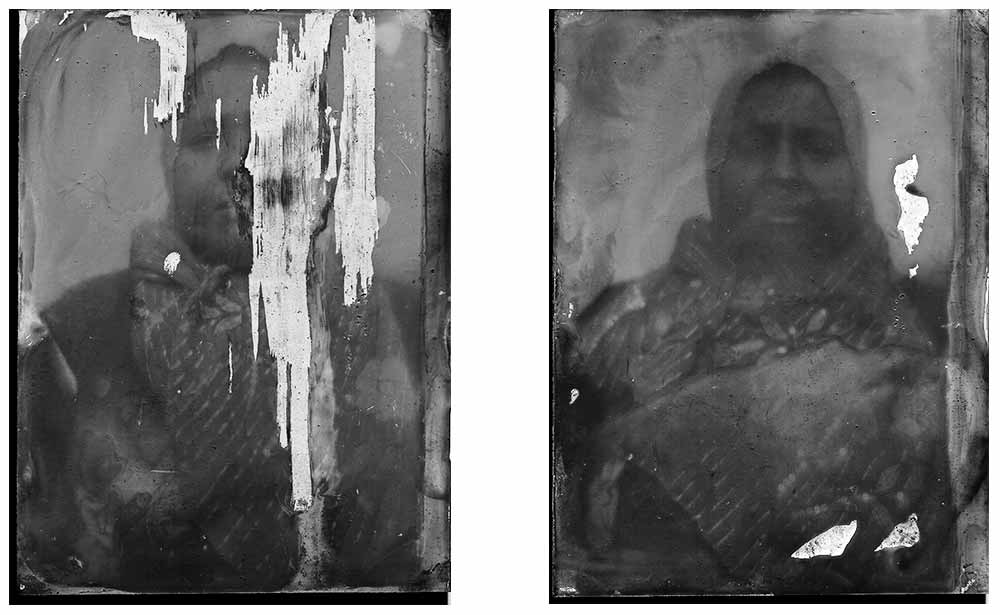
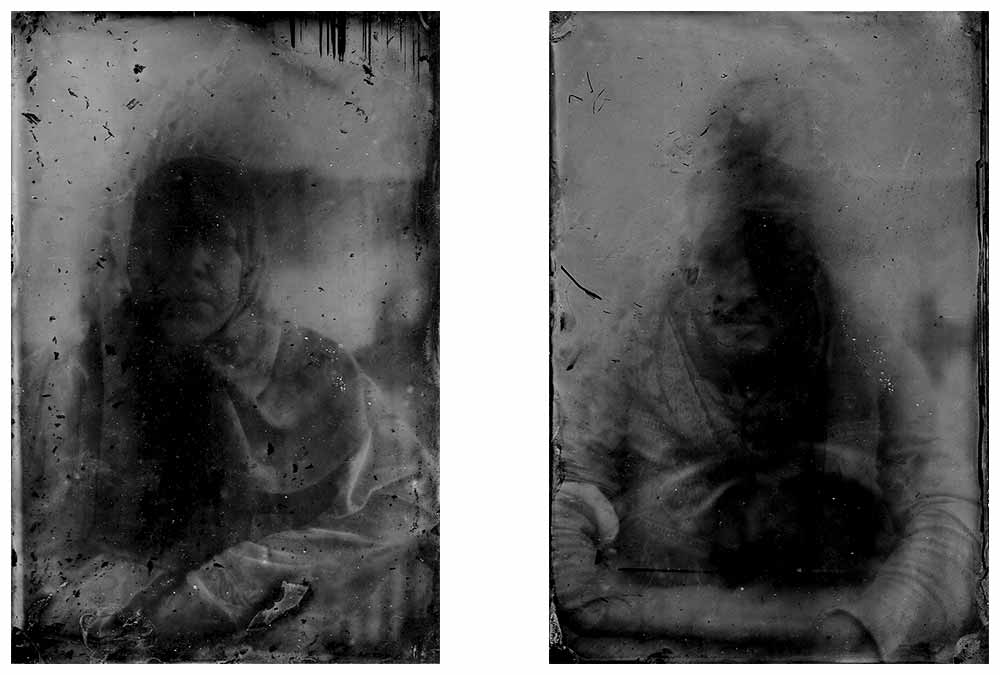
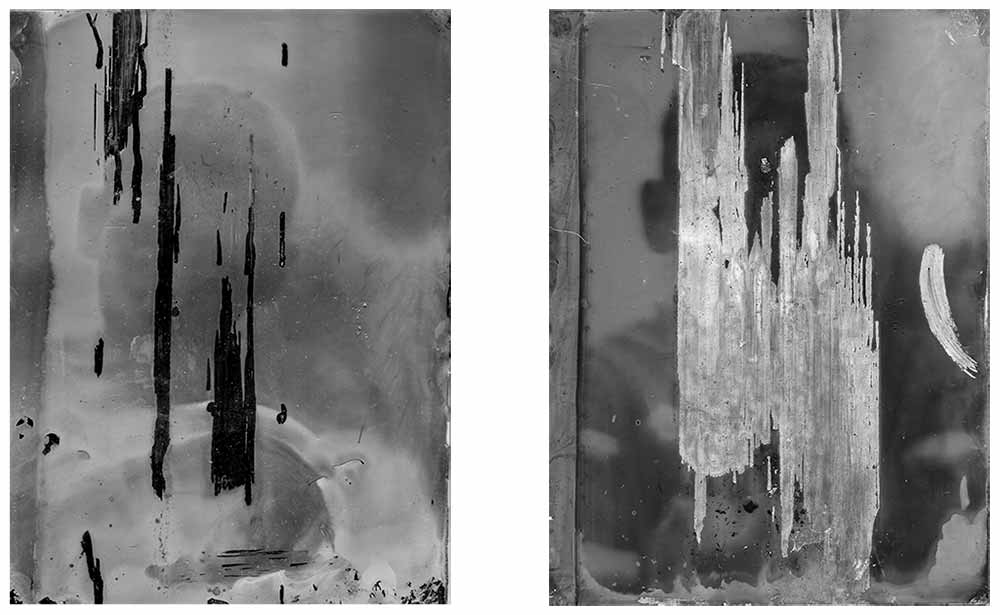
The first images of yours that I remember seeing were dark ghosts. In a strictly technical sense they were the embodiments of intentional imperfection. I like imperfection – it provides me with relief after being flooded by technically perfect images day in, day out.
Imperfections surely have a charm. I see them as fascinating storytellers, visually hinting at the invisible craft that went into their making. Especially when you can touch them on the surface of a photograph, it is as though you travel haptically back to the past.
Technically perfect images are a different kind of storytellers, I feel. The world is fascinating in itself, and they invite us to take it all in at high fidelity. They can act as testimonies and provoke social change and justice. But, of course, they have deceptive powers and keep us from seeing their constructed nature.
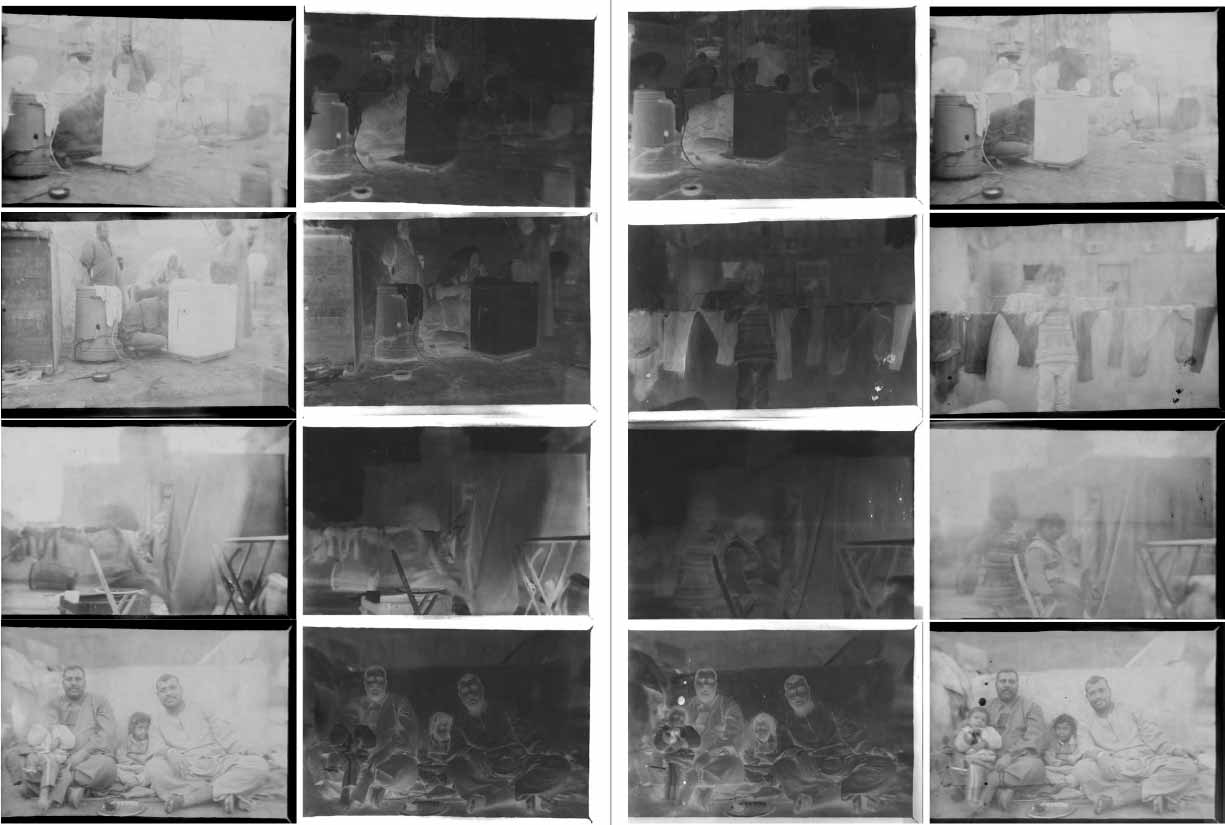
These images are part of a series you call ‘The Eye Sees Not Above the Brow’ – which, not knowing the source of the original Egyptian saying I took for a buddhist observation about the nature of the conscious self. They are large format Colloidon wet plates. Why did you choose this method / process?
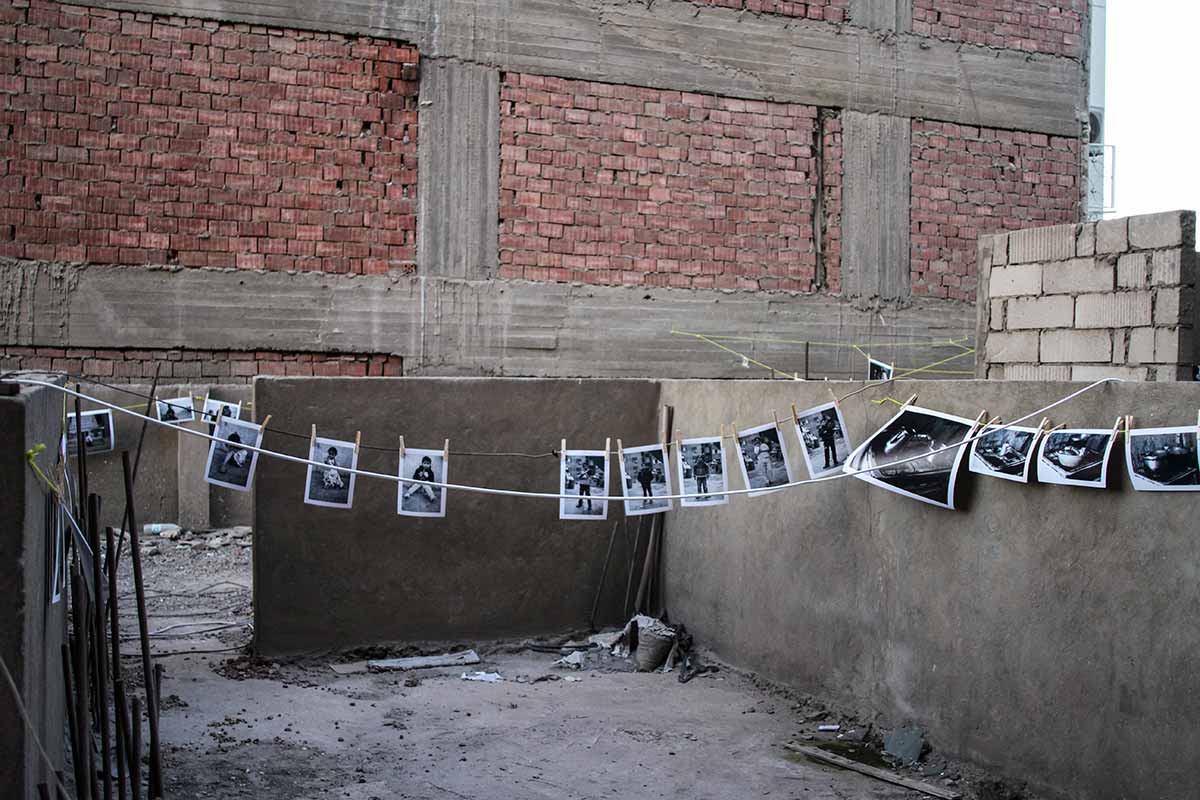
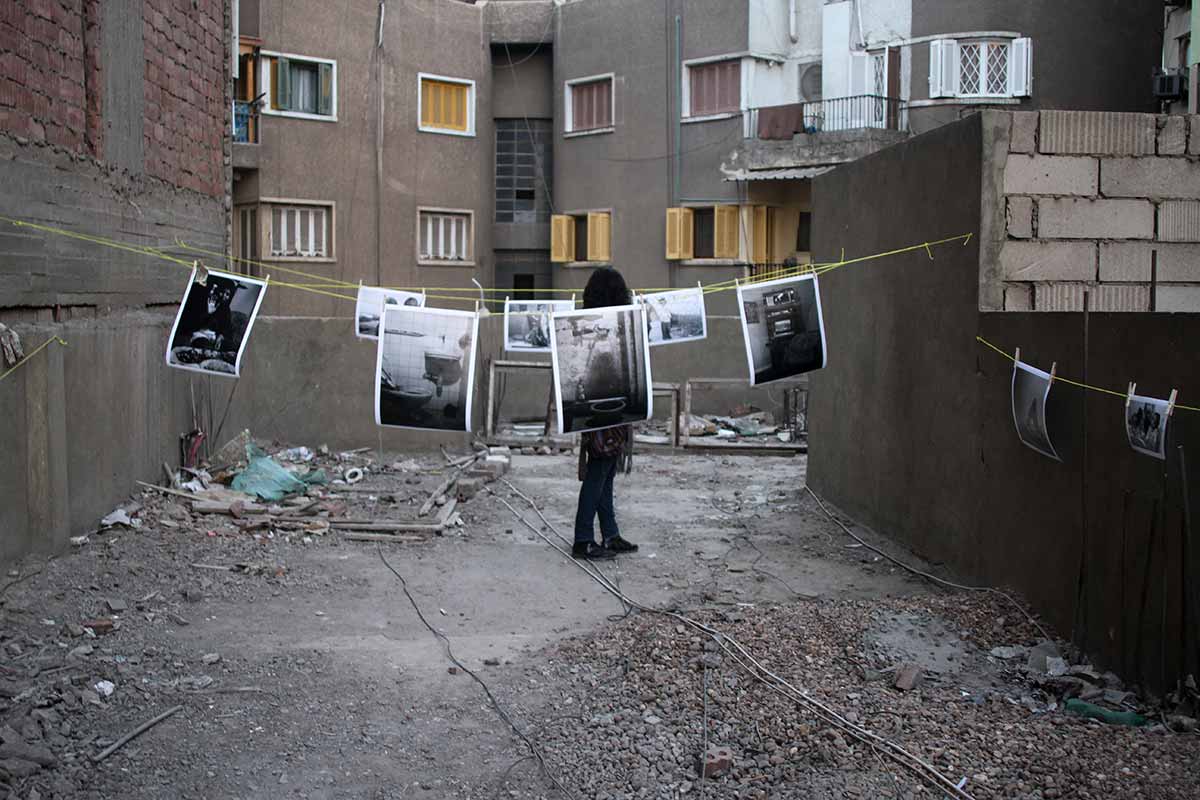
The Egyptian colloquial saying, ‘The eye sees not above the brow’ actually refers to accepting the social hierarchy and discourages the desires to change one’s place in it. With this series of portraits, I am inviting us to face a community living in difficult conditions on the rooftops of Cairo.
The choice behind the Collodion wet plate process came from the context in which I developed this project. During my pre-masters year at the German University in Cairo, I proposed an experiment to my supervisor, Henriette Bornkamm, to make a photo-documentary using different photographic processes. I wanted to investigate the influence of the different modes of practice on what can be visually told with the resulting photographs. During this project, I made digital, 35mm, medium format, large format photographs next to the Collodion wet plates.
Did your dark ghosts come into existence by design or was it a process of experimentation and discovery?
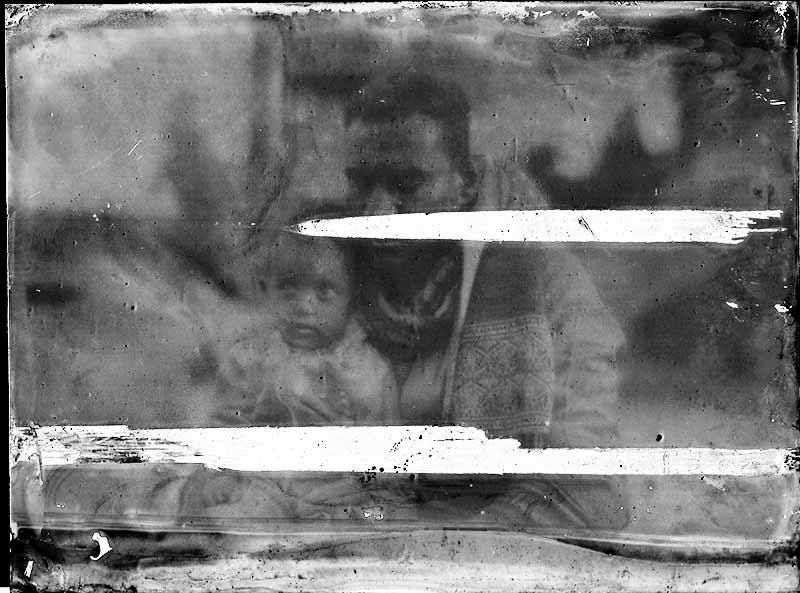
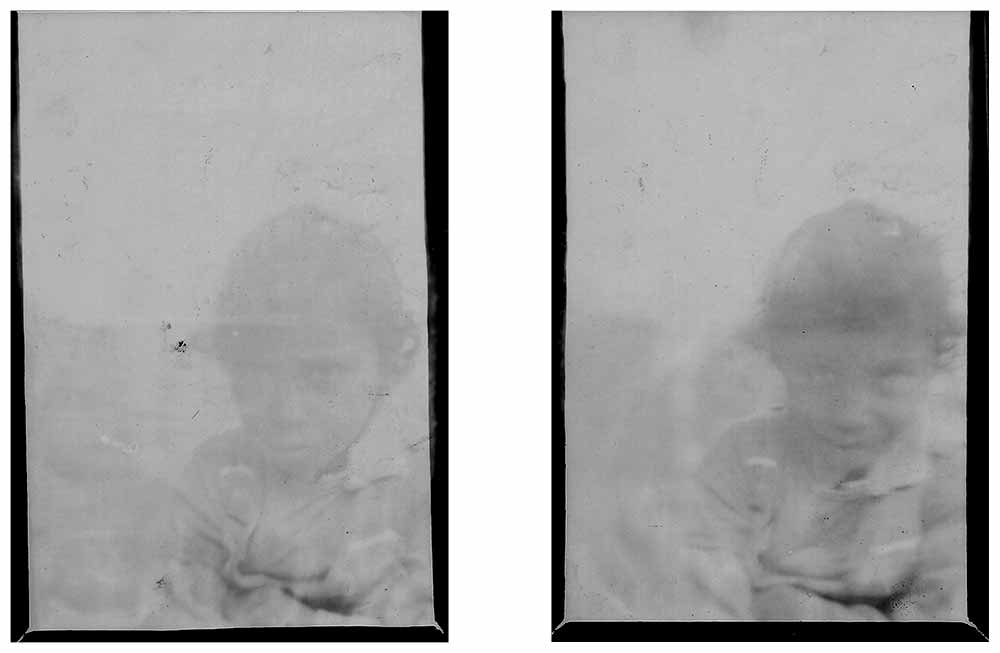
These Collodion plates were products of experimentation and improvisation. It was only after I made them that I realised that their imperfections perfectly reflect what the body of work they are part of is all about. The faded and scratched portraits mirror the spacial and economic marginalisation of the portrayed community of rooftop dwellers.
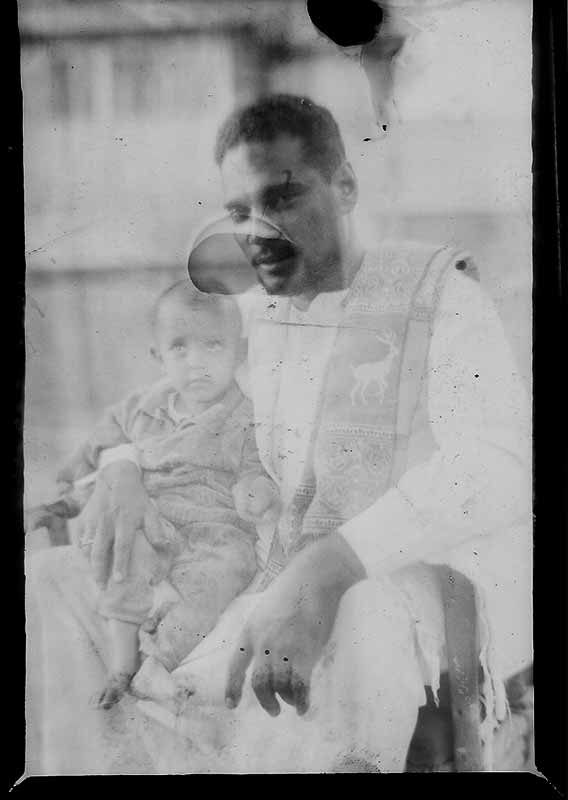
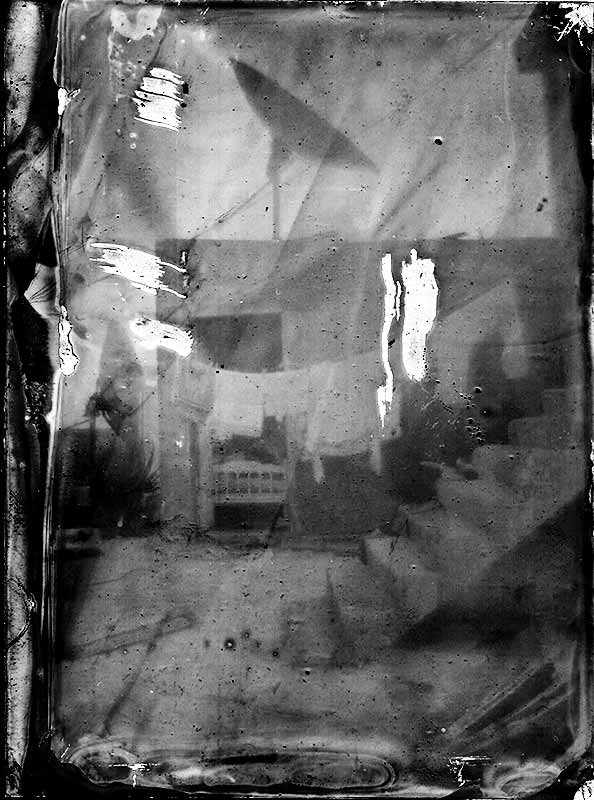
Can you tell me a bit about your physical setup? What were all the ‘tools’ that you needed? What kind of camera and lens did you use?
First, with the help of Egyptian photographer Mohamed Maymouny, I acquired a large format camera (it’s either an S&K or Osaka view camera), a lens (Yamasaki 250mm f4.5), and two 13x18cm film holders. I then began hunting for the chemicals at pharmaceutical stores, chemical suppliers, and photographic studios.
The next step was getting the plates onto which I will photograph, but I couldn’t find thin-enough glass, so I ended up using silver and black aluminium sheets. Afterwards, I designed a portable wooden box that can be easily un/mounted. One side of the box had a small opening covered with red plexiglass so that I’d be able to see inside. At the other end of the box, I attached a cylindrical black-out curtain which I would tie around my waist as I sat at the table on which the box was placed. I have to say; it was quite tiresome going all the way up to the rooftop of buildings that did not have elevators!
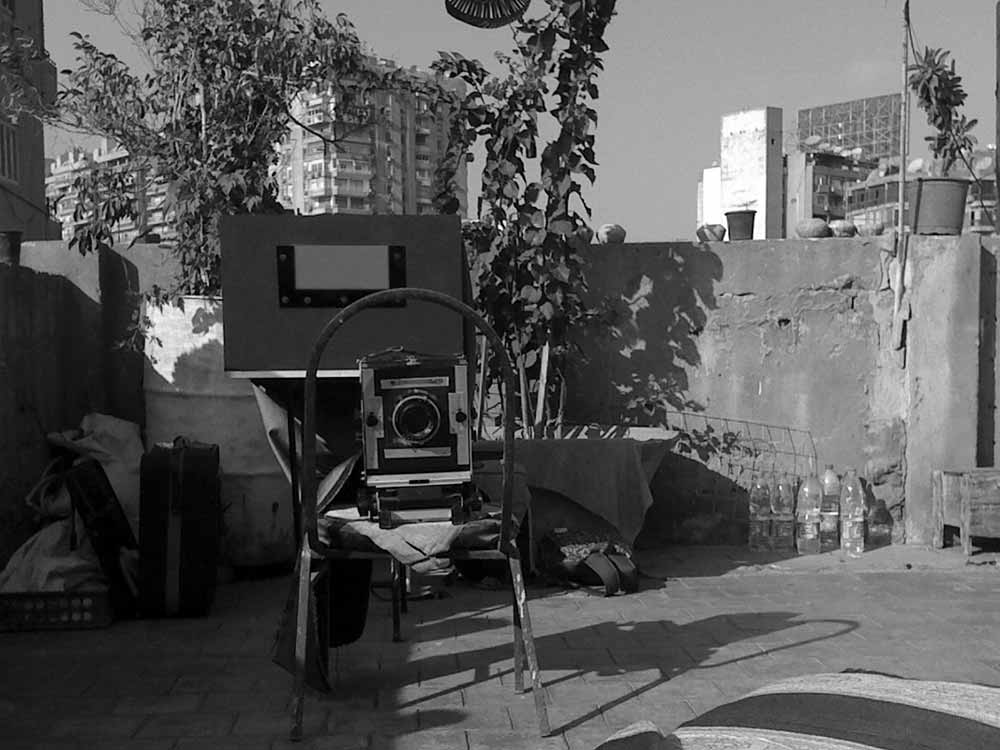
On the rooftop, I would first coat the metal sheet with a Collodion layer. Then I would ‘enter’ my darkroom box, let the sheet sit in a bath of silver nitrate, which turns it light-sensitive, and wait outside until the timer rings. Back into the darkroom, I would place the sheet in a holder, then take the holder out and into the camera to be photographed before it dries.
I would have already arranged the camera with the focus set on the person who was now awkwardly keeping their pose and was waiting to be photographed. Instead of measuring the exposure time I relied on counting. Through my early tests I had a rough sense of the sheets’ low sensitivity. So those photographed had to stay still for an average of half a minute or so —which often ended with them bursting in laughter once I put the lid back onto the lens.
Once again in my darkroom, I would take the exposed sheet out of the holder and pass it through three washes, first in the developer, then in water, and finally in the fixer. The slow appearing of the picture on the surface of the metal is worth all the efforts. Sometimes parts of the picture would float up and leave the surface of the plate in this process. That would happen if the layer of Collodion wasn’t thick enough in some areas, hence not keeping the image glued onto the metal. It was a bit upsetting but at the same time fascinating to see! The resulting plates had all sorts of missing parts, scratched surfaces, and faded faces.
How did you find your sitters? Do you think that they were more comfortable with you exactly because of your physically overbearing but seemingly ancient setup? Do you think that shooting on a digital camera would have been perhaps more intimidating? I wish I could also see the images where they are laughing…
The families I worked with were residing in the same neighbourhood in Cairo as me at that time. The first family were my direct neighbours, and I could see their rooftop out of my room’s window. To meet more rooftop residents, I reached out to friends and family to introduce me to the people living at the top of their buildings. As I was using different photographic processes in this project, I did notice that the more unfamiliar the camera appeared, the more my subjects were feeling at ease with being photographed.
Bringing a variety of old ‘toys’ made me seem less intimidating when I held the SLR camera, which, I felt, they associated unconsciously with wary intentions. The old cameras stirred their curiosity instead and opened up a space for participation. — Perhaps these fleeting moments of laughter are special gems that photographers get to keep to themselves!
So now that we can appreciate just how time-consuming and complex this process is – let me ask you again: deep down, why did you choose the process? My intuition is telling me that apart from loving the kind of images that the process produces you had to love the time and the effort that went into creating each image.
Definitely! What made it all the more enjoyable is probably the frustration phase at the beginning of the project. Before going to the rooftops, I spent a good amount of time fiddling around with the chemicals and improvising in building a setup from what was accessible to me in Cairo.
For instance, when I couldn’t find thin glass, I resorted to silver and black metal sheets. While the black sheet was very scarce, the abundant light aluminium was sold rolled, so I had to flatten it. The unavoidable bends sometimes resulted in the sheet getting scratched when I opened or closed the holder. It was also quite tricky to mix the chemicals needed for a positive developer, so I ended up using a negative developer for all my experiments. This meant that when I photographed onto a black sheet, the image came out as a positive, but when I photographed onto aluminium, the image appeared inverted on the surface of the plate.
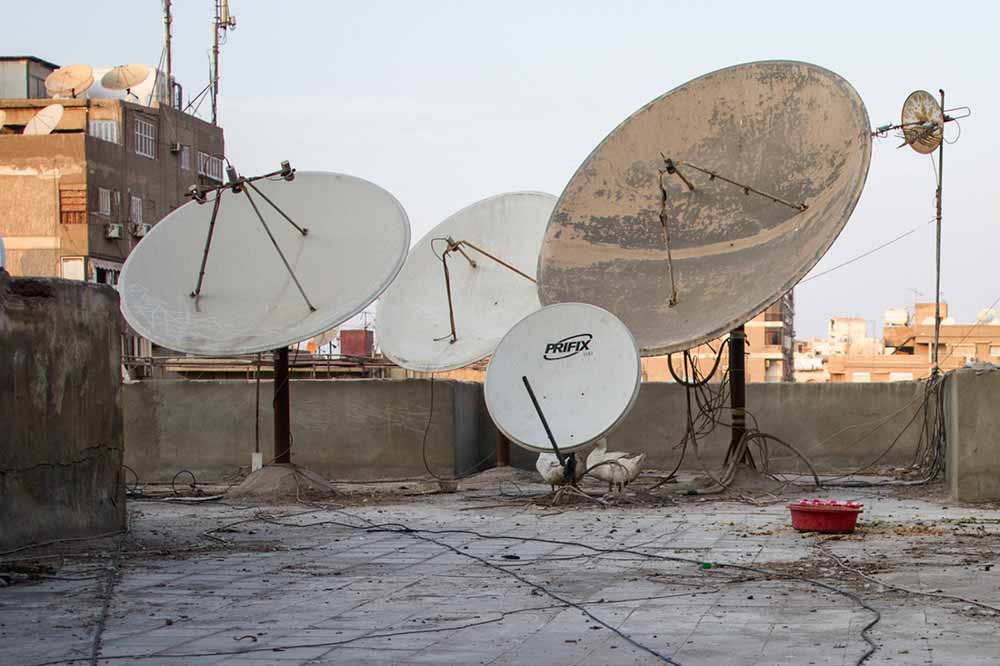
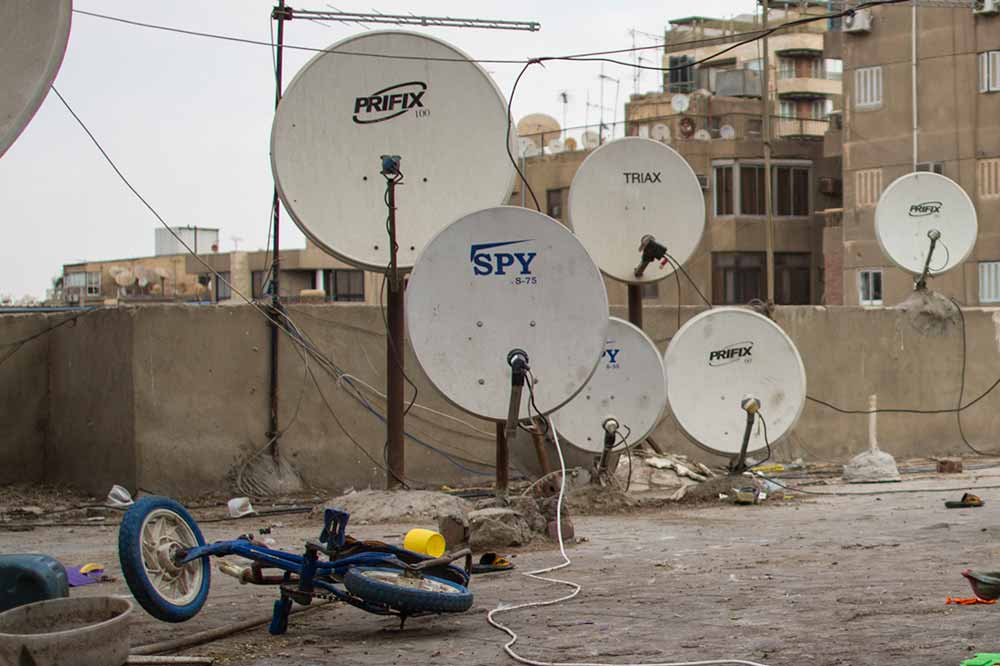
How did it feel to use digital afterwards for taking the shots of the satellite dishes on the rooftops?
Switching between the different cameras that I worked with during this project was not just a change in gear or speed. It really was a change in the way of seeing. With the digital camera in hand, it was as though my eyes were engaging in a spacial exploration of the surroundings. While I was driven to capture fleeting moments digitally, the slow mode of making the Collodion wet plates gave space instead to work together with my subjects on their portraits. They were involved in choosing where and how they want to be photographed. We would also exchange places so that they would see me sitting in front of the camera in the final frame, visible upside down on the back of the view camera.
How do you feel about social media? I often have the impression that this topic is like talking about atheism inside a cathedral or a mosque. Most people love to ‘embrace’ sharing images on social media and many do not dare or wish to speak out against the oppressive nature of working hard to create images and then dooming them to half-seconds on existence on a non-calibrated, small display.
There are surely numerous downsides to social media, such as that fast mode of consuming images on small screens, the presence of algorithms that dictate what appears on feeds, and the vulnerability resulting from translating likes and follows to acknowledgement and recognition.
I don’t see myself as someone who’s embracing social media, but I am also aware of the benefits that it has to offer. Especially with the restrictions imposed by the ongoing pandemic, it is allowing me to disseminate my work and stay informed about current debates and inspiring competition. More importantly, it is facilitating my continued engagement with fellow artists, colleagues, and mentors despite the physical distance. That being said, I sure hope we envision a better model for social media in the near future.
Slideshow of Sara’s Photos
All images © Sara Sallam and are reproduced with the permission of the author. To see more of Sara’s photography visit her web site or have a look at her instagram account.
This interview has first been published on Lightbites on 3rd April, 2021.
György is a cinematographer running ExposureWorks and teaching 1-to-1 video and photography courses in the UK. To book a class or for more information browse the courses on ExposureWorks.