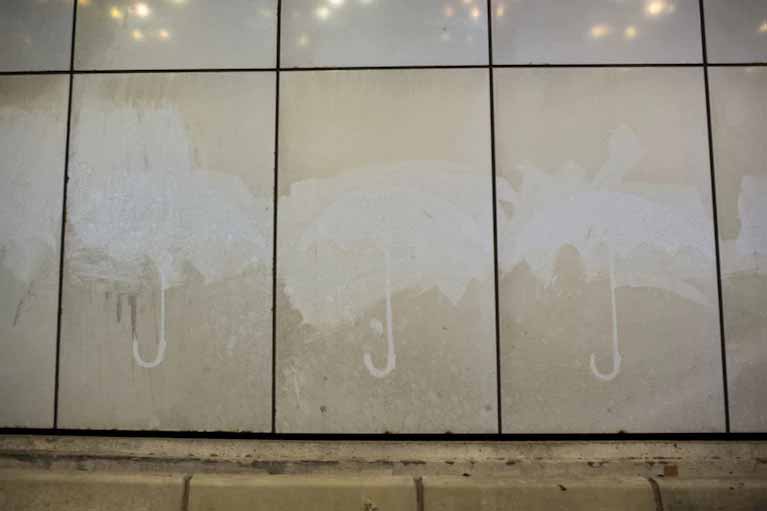
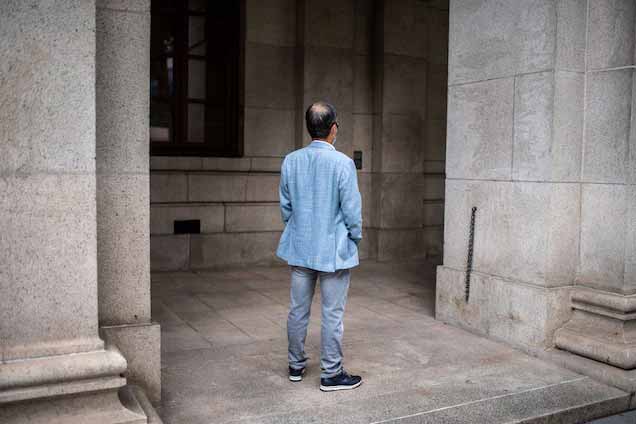
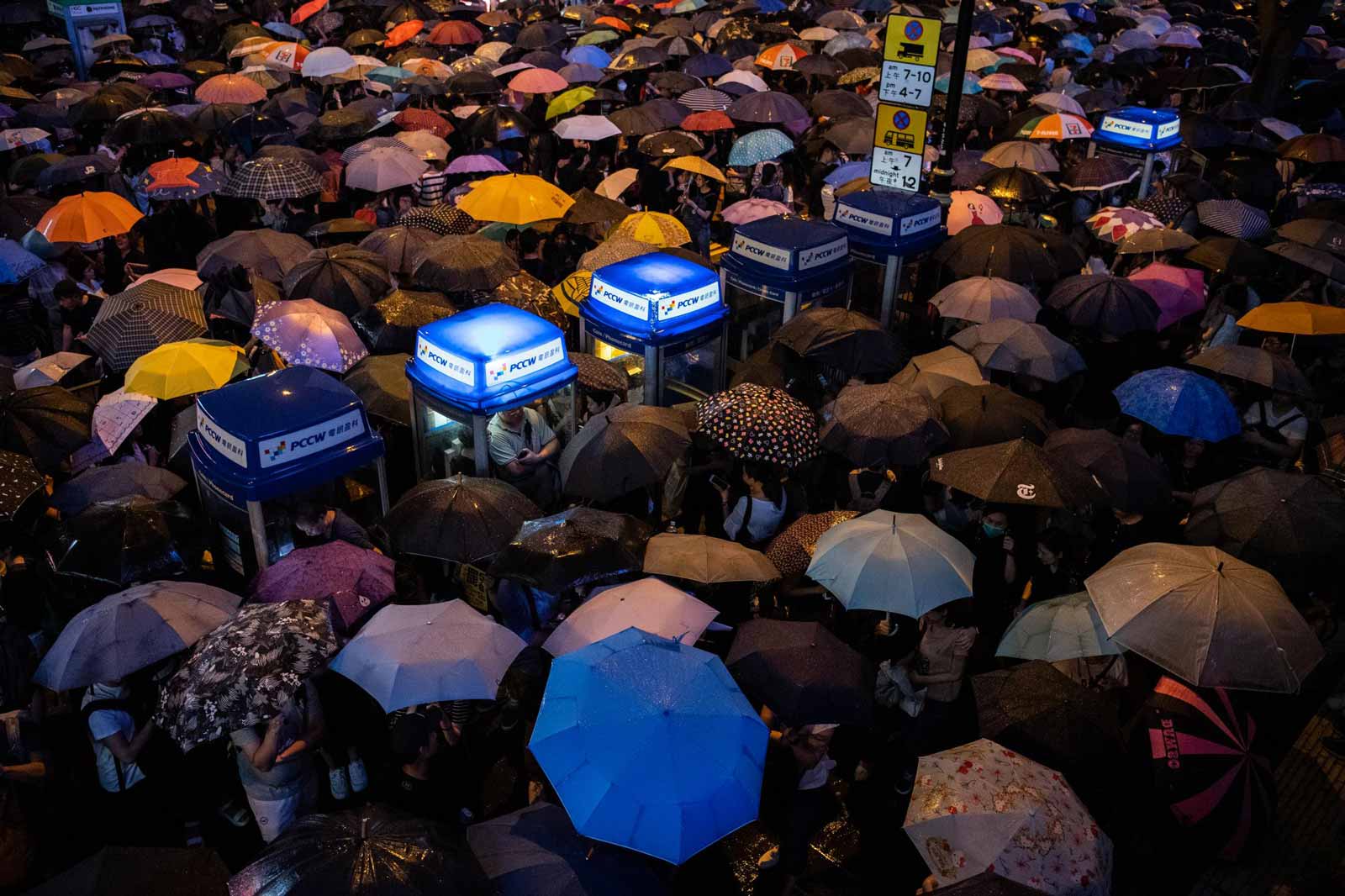
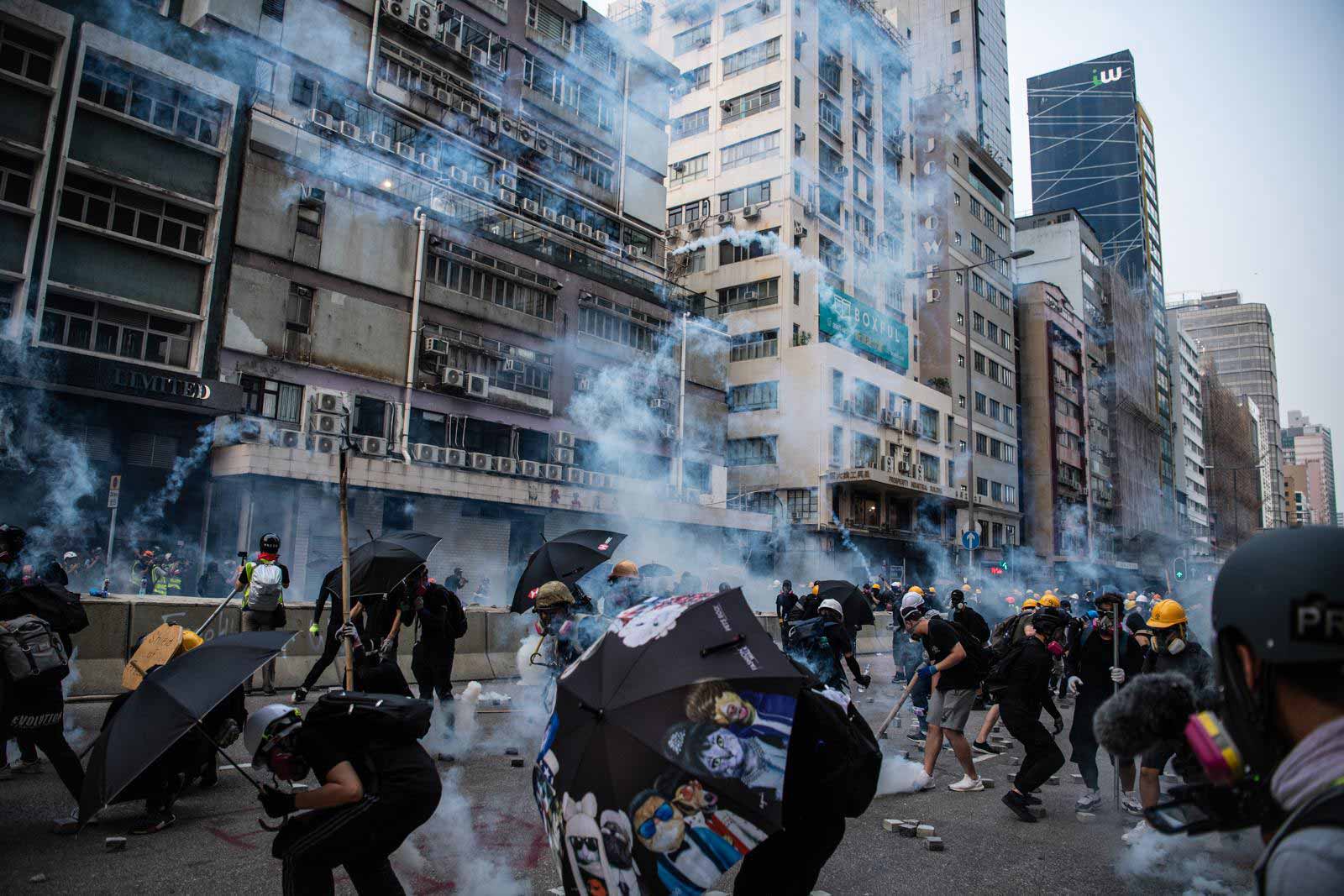
Documentary photography and photojournalism are often dominated by context and showing what “is”: an event, a place, a person. Portraying what “is not”, what “is no more” just with an image is extremely difficult. Your picture of the umbrellas that were once there, were partly erased but still remain is a great and rare example of a photo succeeding exactly at this: showing the 2019-20 Hong Kong protesters that are no longer there. How was this image born?
Laurel Chor:
I was in an Uber asking the (very helpful and cooperative) driver to drive me around the city looking for billboards put up by the government in support of the National Security Law. Driving through this tunnel, I noticed the graffiti still visible on the walls – so I asked him to drive through again. I stuck my camera out the window and held the shutter button down, and managed to get this shot. I had been thinking a lot about the scars – visible and invisible – left behind by the protests, and painted-over graffiti remains all over the city. This was one attempt to capture some of these “scars”.
As a documentary photographer are you more attracted (both visually and thematically) to figurative images? How do you feel about more abstract photos like this, where the story you’re telling is hidden behind a layer of abstraction?
Throughout the protests, my photojournalism work had been reactive – I was on the scene and documenting what I witnessed in an intense, fast-changing situation. But after the protests died down, the decline of Hong Kong’s political autonomy continued, and it became more difficult to document something that is entirely abstract. So I was forced to go out of my comfort zone and to think more conceptually about how I wanted to tell the Hong Kong story in a visual way, when there was seemingly nothing left to photograph.
Do you tend to go back to the locations where protest took place later? A day, a week, a year later? Perhaps looking for signs of change or lasting impact?
I do. Many of the protests happened on streets that I passed every day. For the most part, you’d have no idea that violent protests happened in Hong Kong not long ago. It’s pretty jarring to see how daily life resumes within hours of violent clashes between protesters and police.
Back to the story of the Hong Kong protests of 2019-20. Let’s start with you, a photographer who feels the need to tell a story with images, and in your case, also with words.
Protests, when you’re in the middle of them, are chaotic events. But for you, a storyteller, there has to be method (otherwise it’s just madness). How do you find or create a method for your photography in a demonstration? Or is it about going with the flow of events?
It depends on the assignment! If I’m working for a wire agency, then I’ll be following the events and coordinating with colleagues so that we cover as much as possible in terms of events and geographic area. If I’m reporting for a newspaper, then I have to spend time talking to people and getting quotes. But in general, the protests were unpredictable so you were just trying to catch up with the protesters and stay with the “action”. Sometimes the full picture of the day doesn’t emerge until you’ve gone home and have been able to digest what’s happened.
As a day of protest unfolds, do you have a story in your mind that you are trying to illustrate with your images or are you recording events with your camera, concentrating on the creative aspects of the photo? And then later, a story emerges from the images?
To be honest, the protests are so intense and fast-paced that you really only have time to react to what’s going on around you. That’s why it’s so important to have your technical skills down before you try to cover a news event like a protest.
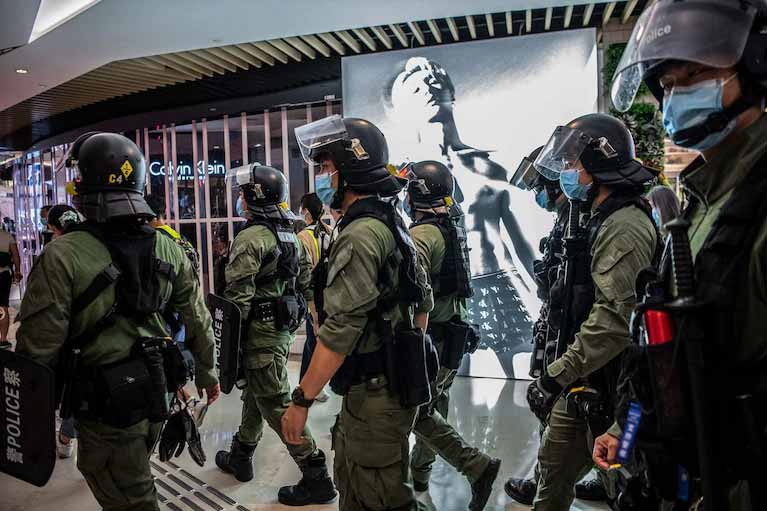
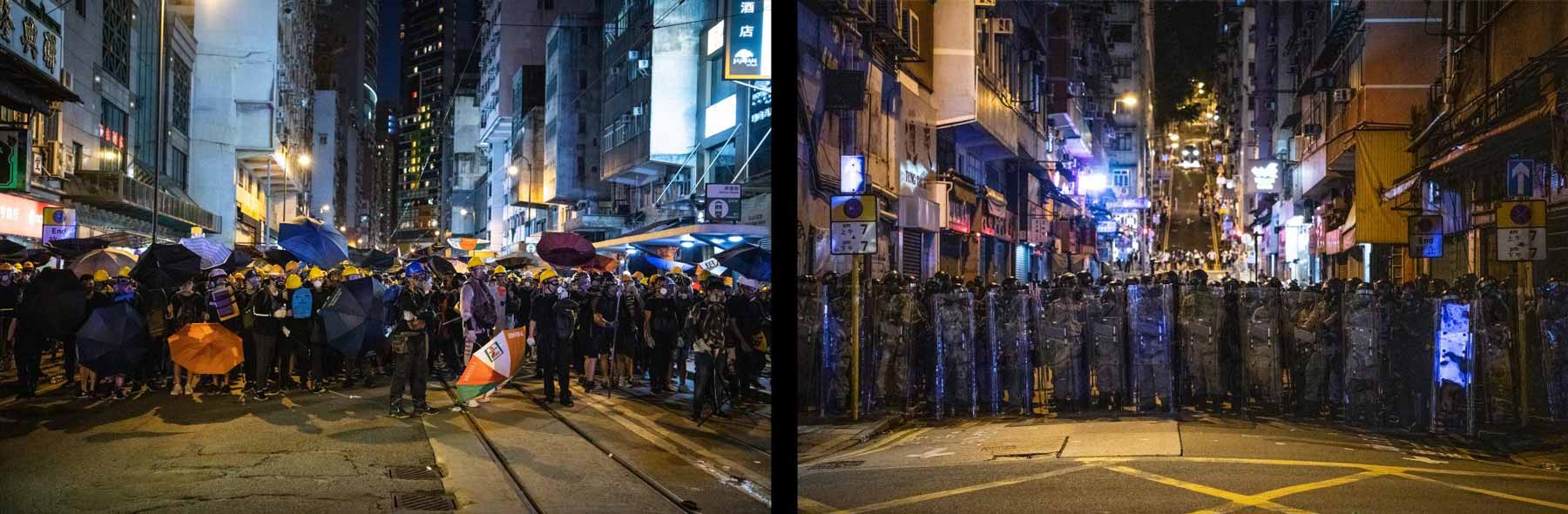
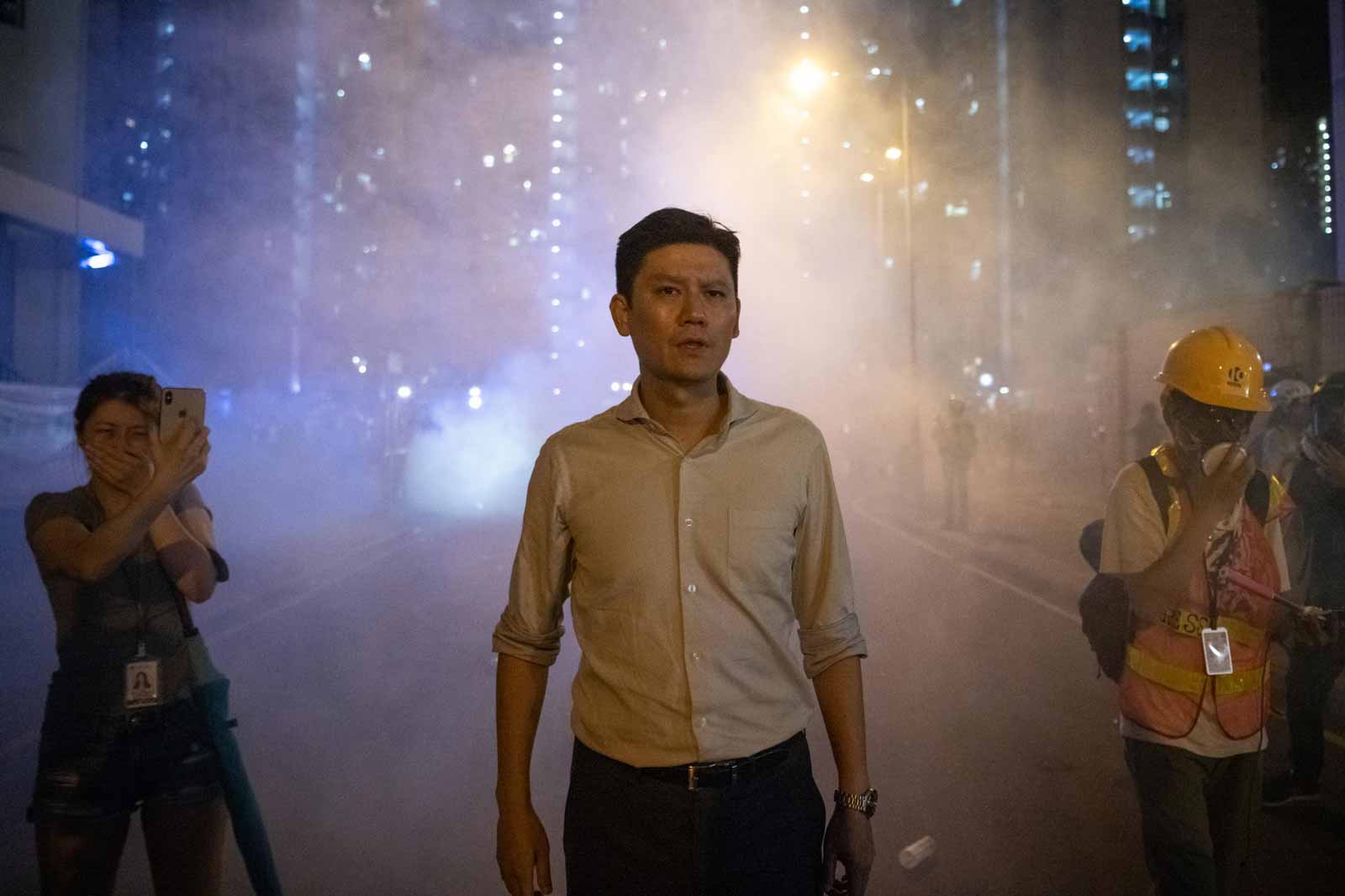
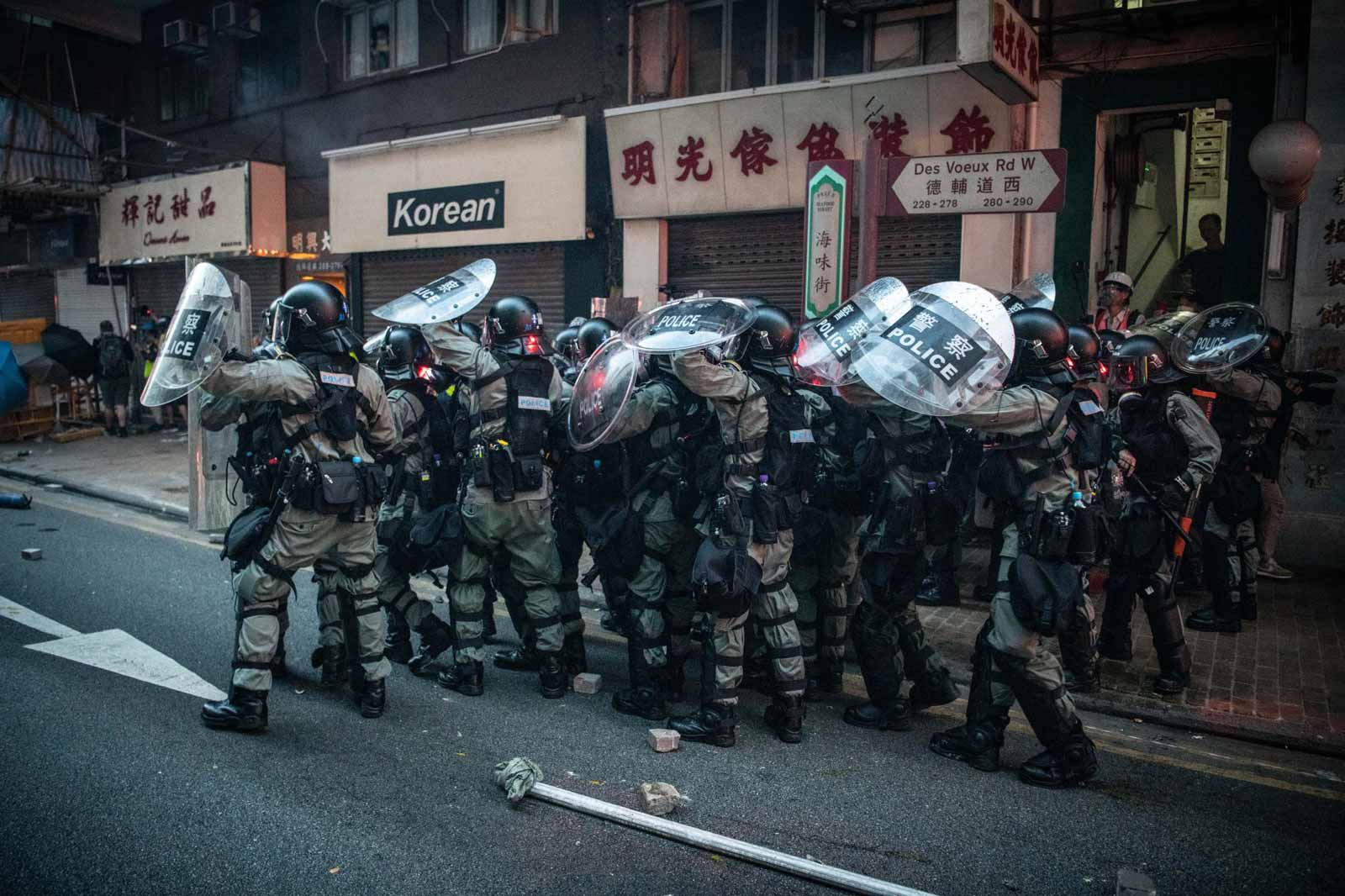
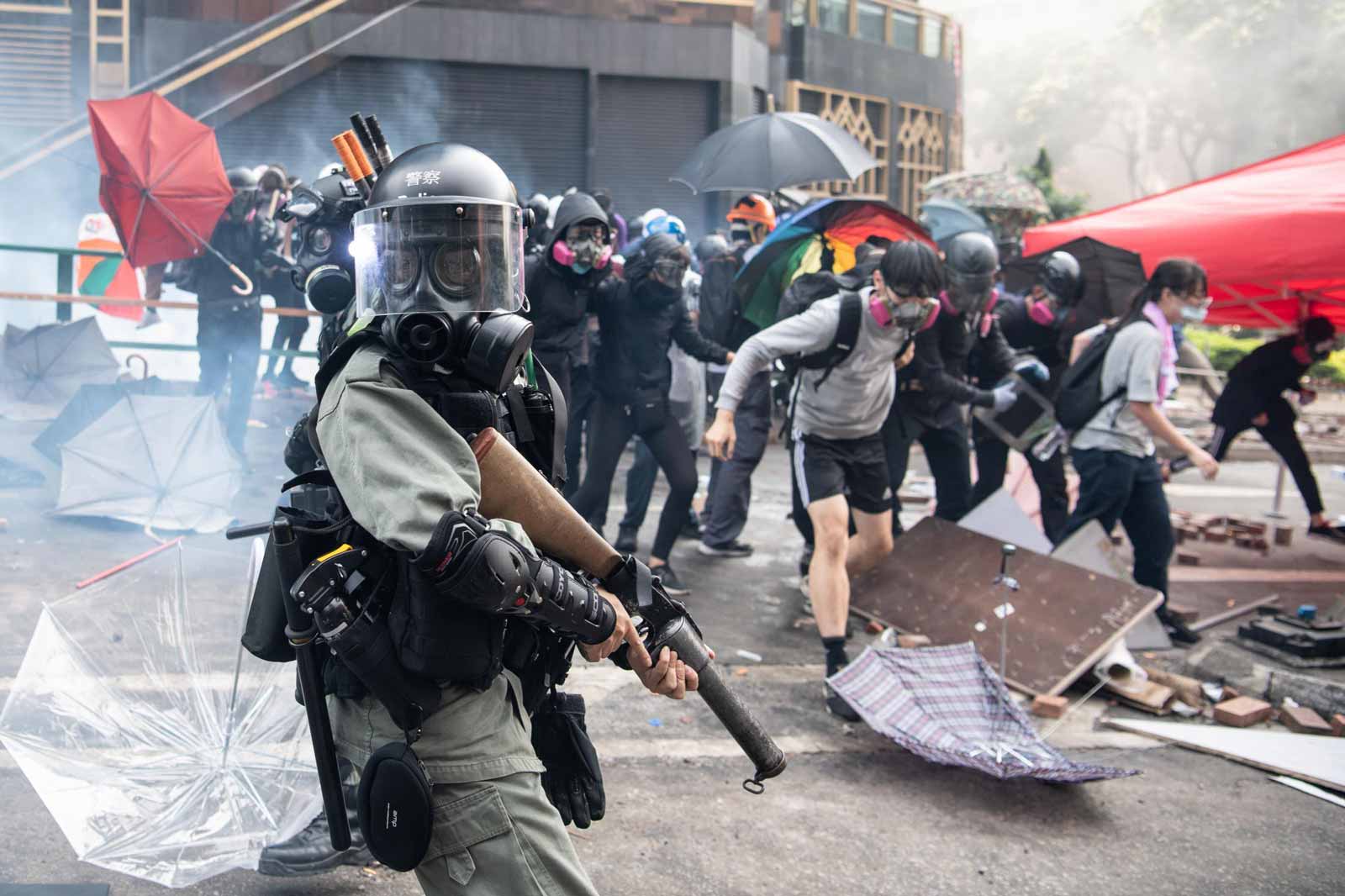
I am the kind of person who looks for some level of abstraction in any event. I love the diptych (above) – especially as I imagine you standing right in between the two sides with your camera, first turning one way and then the other. Is this how it happened?
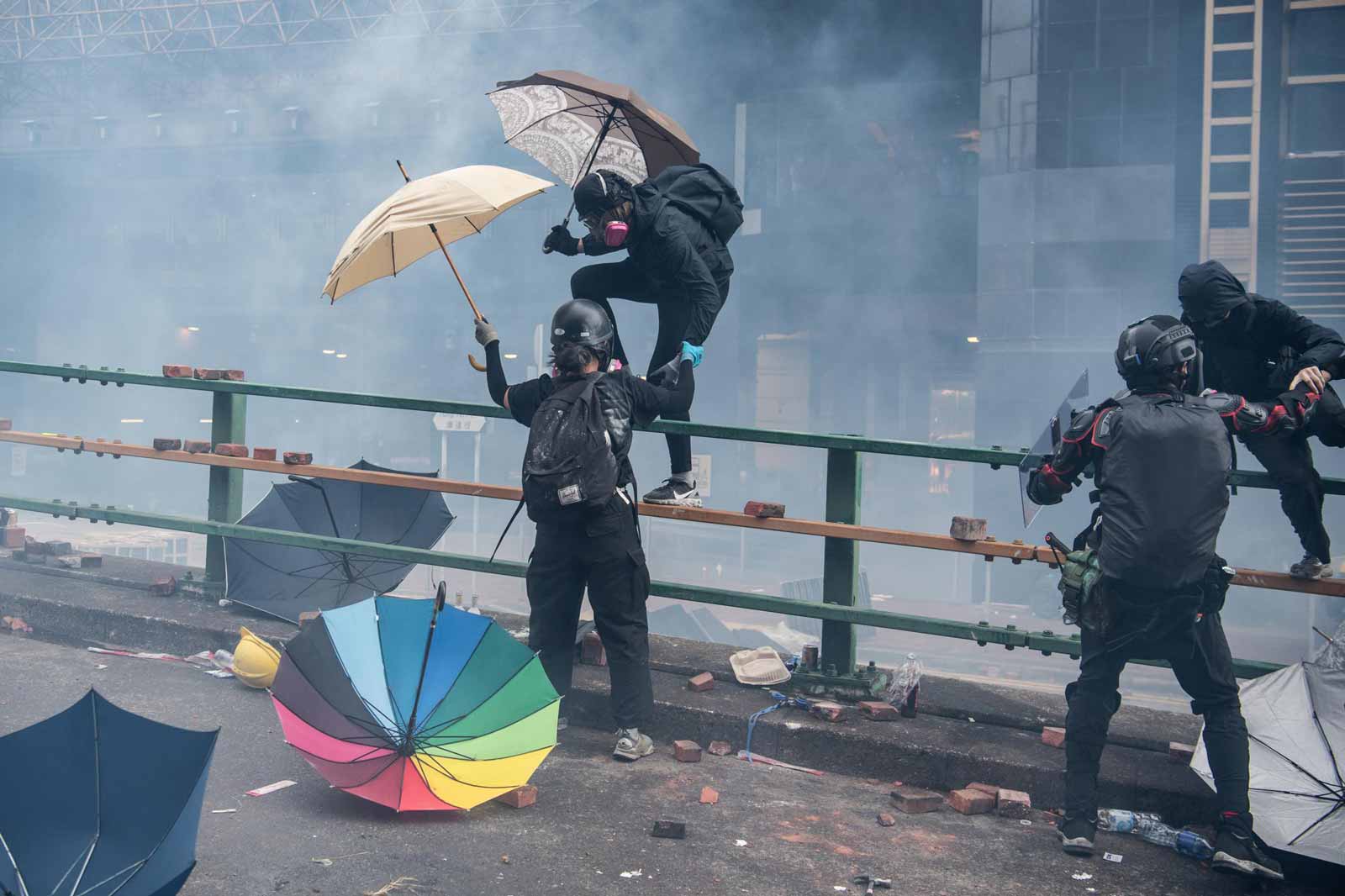
Basically, except they were actually (oddly) on perpendicular streets. Often during these protests, there’s a tense stand-off that remains for sometime.
On a more practical level: when you’re covering potentially violent events, how do you get ready for the day before you leave home? You wake up in the morning, brush your teeth, have tea or coffee and then… How do you choose your clothing? What’s all the non-photographic items that you must not forget to take with you?
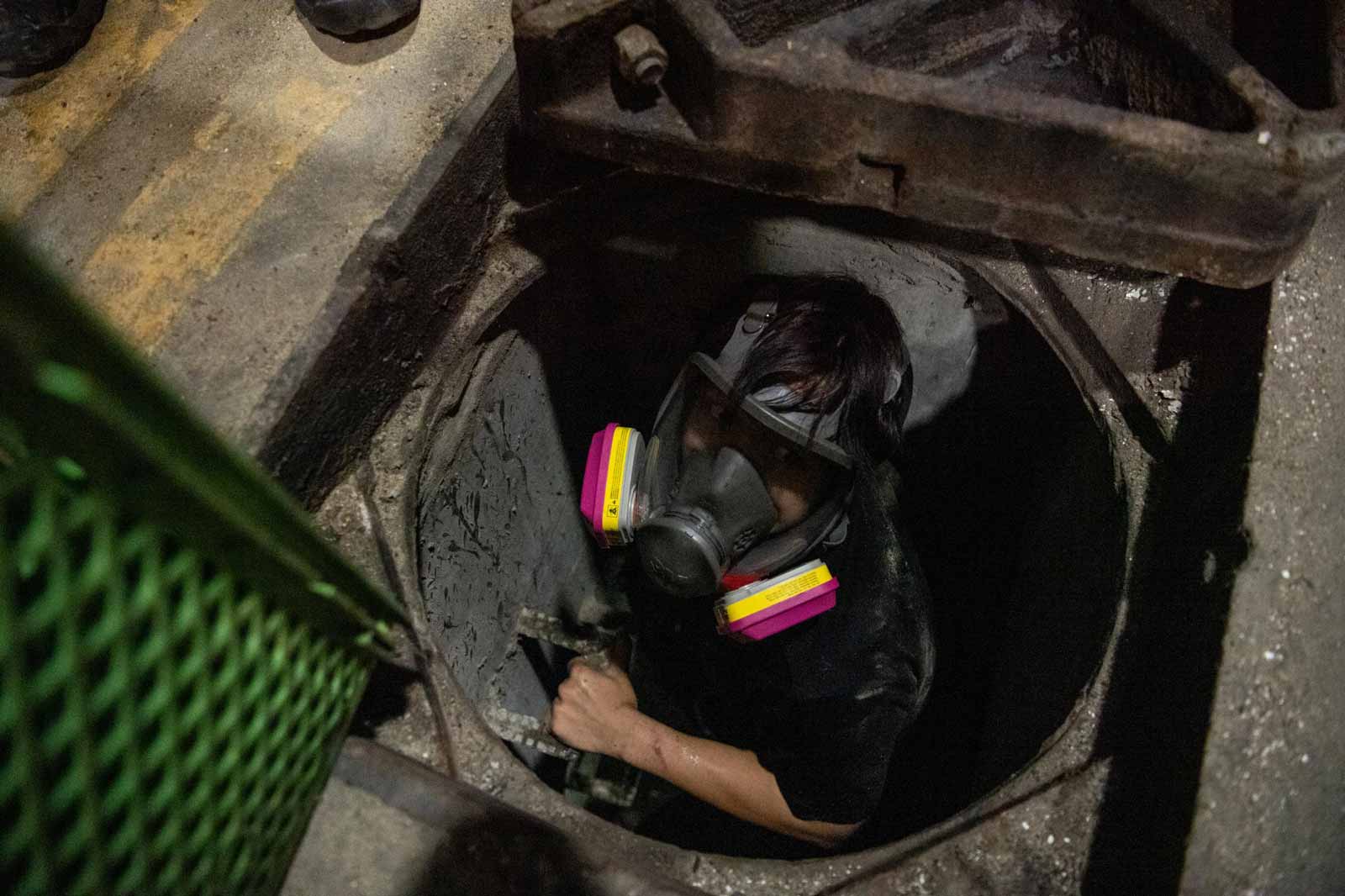
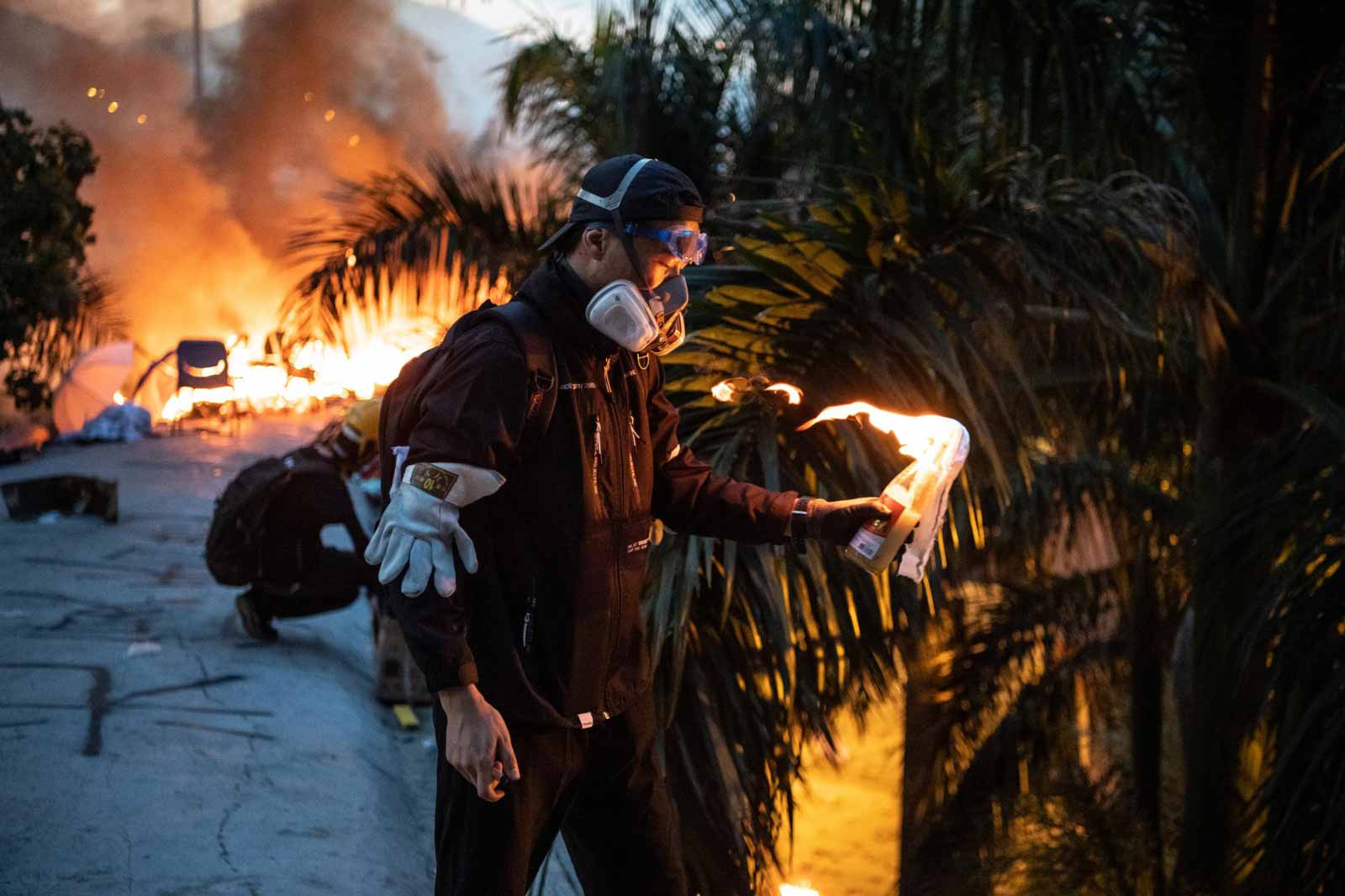
I’ll try to get a good night’s sleep and have a normal morning/afternoon, maybe even hit the gym. I’ll eat a good meal so that I’m well-nourished for the day ahead. I’ll prepare my gear: helmet, gas mask, CamelBak full of water, protein bar, press vest, press badge, saline solution (to flush out tear gas or pepper spray), a towel, my laptop, card reader, spare batteries and memory cards, and a portable charger for my phone. Sometimes I wore knee pads, and on a few occasions I wore a flak jacket. I wore sturdy, waterproof boots and I tried to wear natural fibers (because synthetic fibers will melt to your skin if it catches on fire). Comfort is key – you will be running around, climbing over things and sweating buckets.
What kind of photographic gear do you use for these events? Are you a single lens person or a photographer with multiple cameras and multiple zoom lenses?
At the beginning I carried around two camera bodies with two lenses. But it became too heavy, and the vast majority of my photos are taken with my trusty Nikon 24-70mm f/2.8 lens. I would still carry a 70-200mm in my backpack most of the time, but rarely used it. I still carried it around because, you know, you only need it when you don’t have it!
How do you stay safe and how do you keep your equipment safe? Obviously, one never knows one’s limits until you’ve been “there” – have you already found your limits? Were you forced into a position where you had to really choose between personal safety and capturing and image?
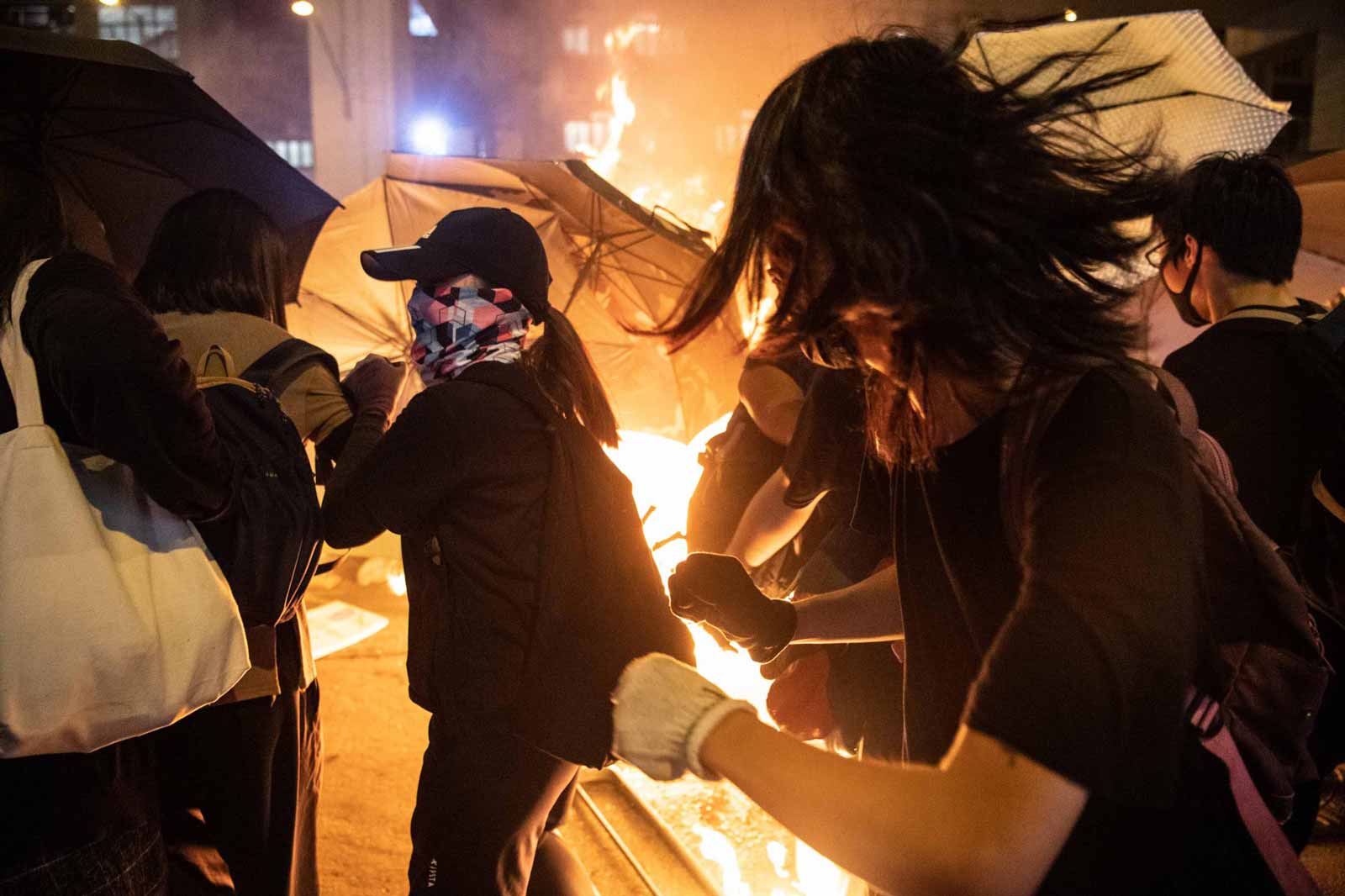
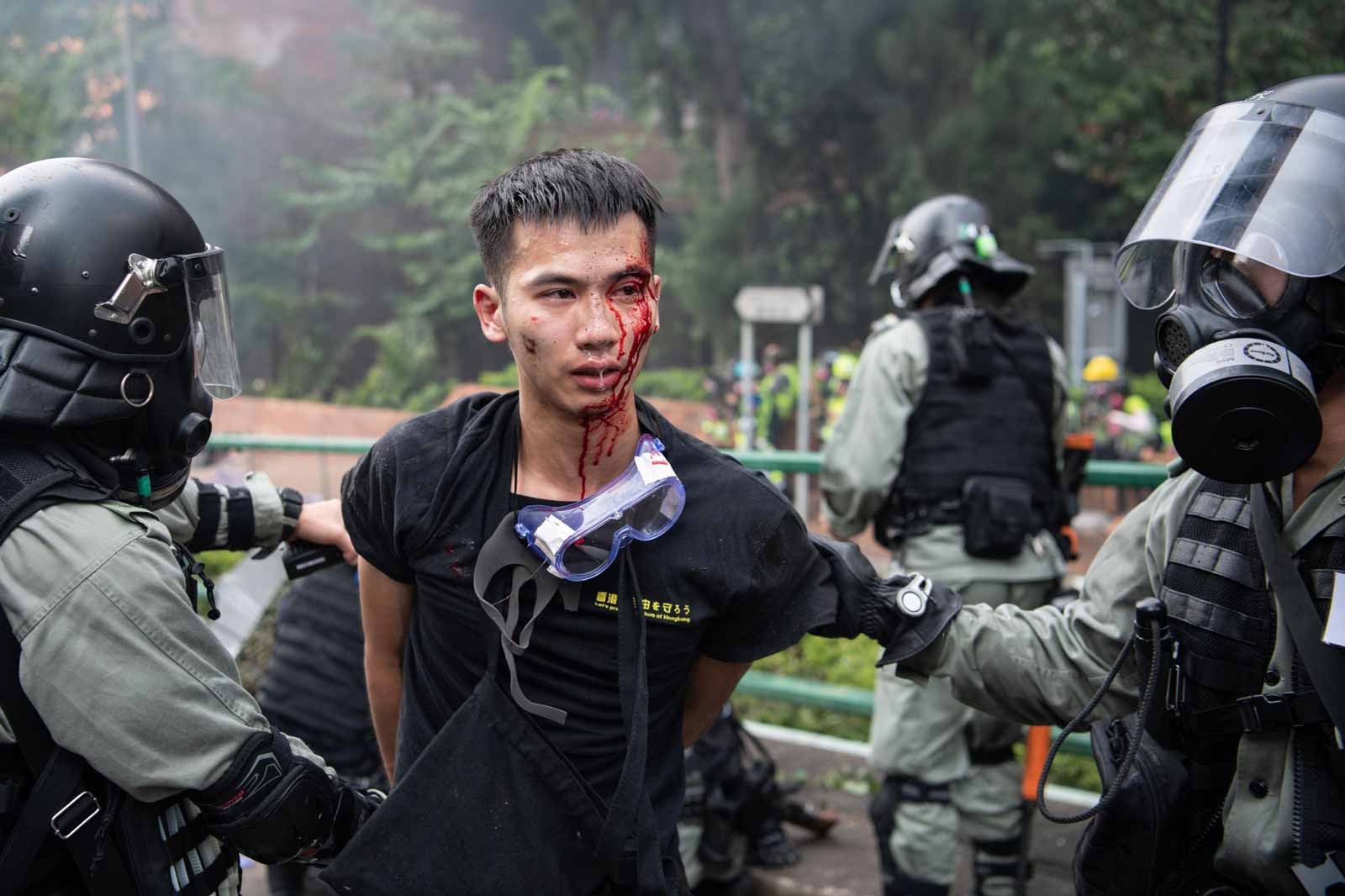
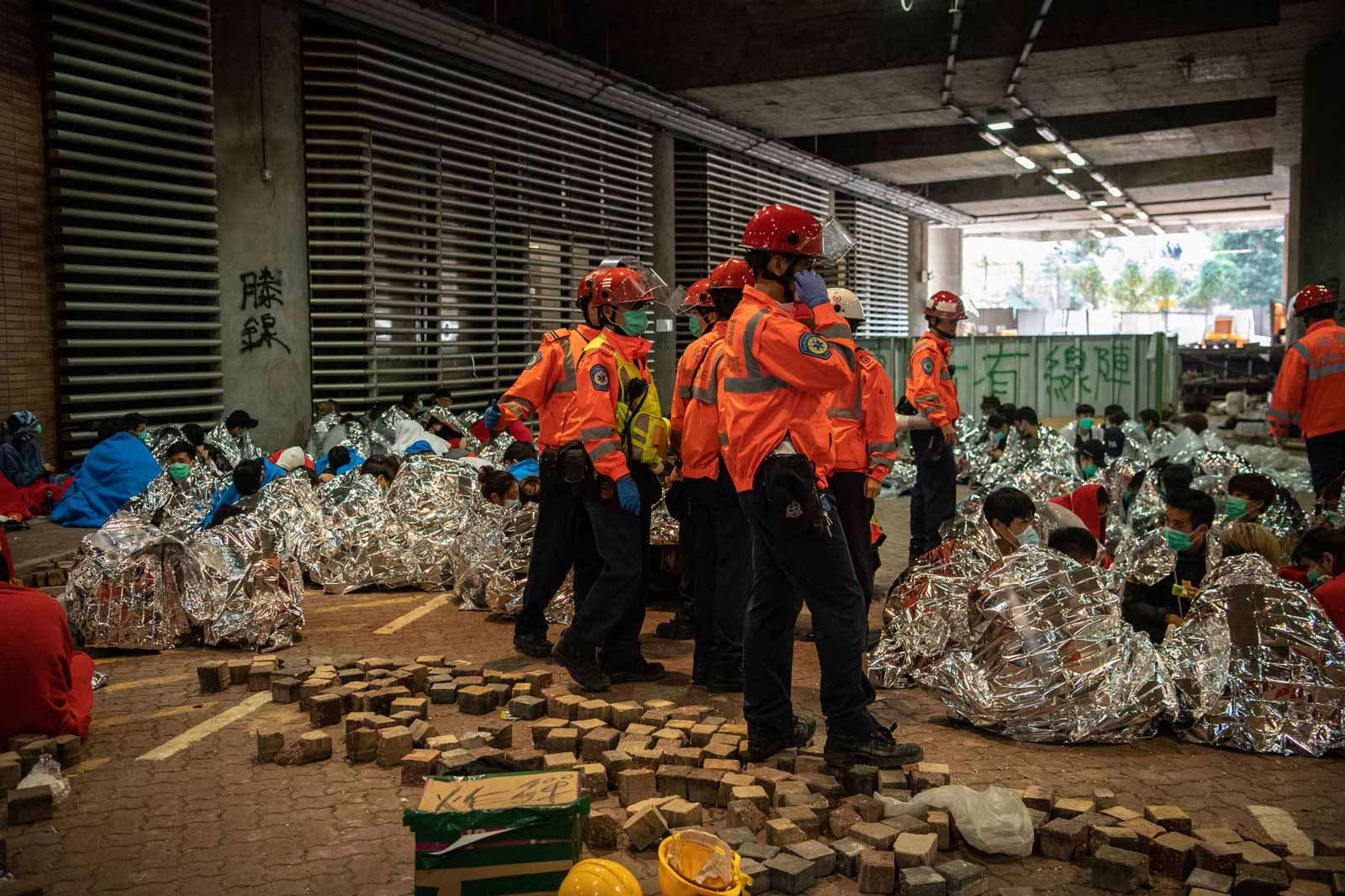
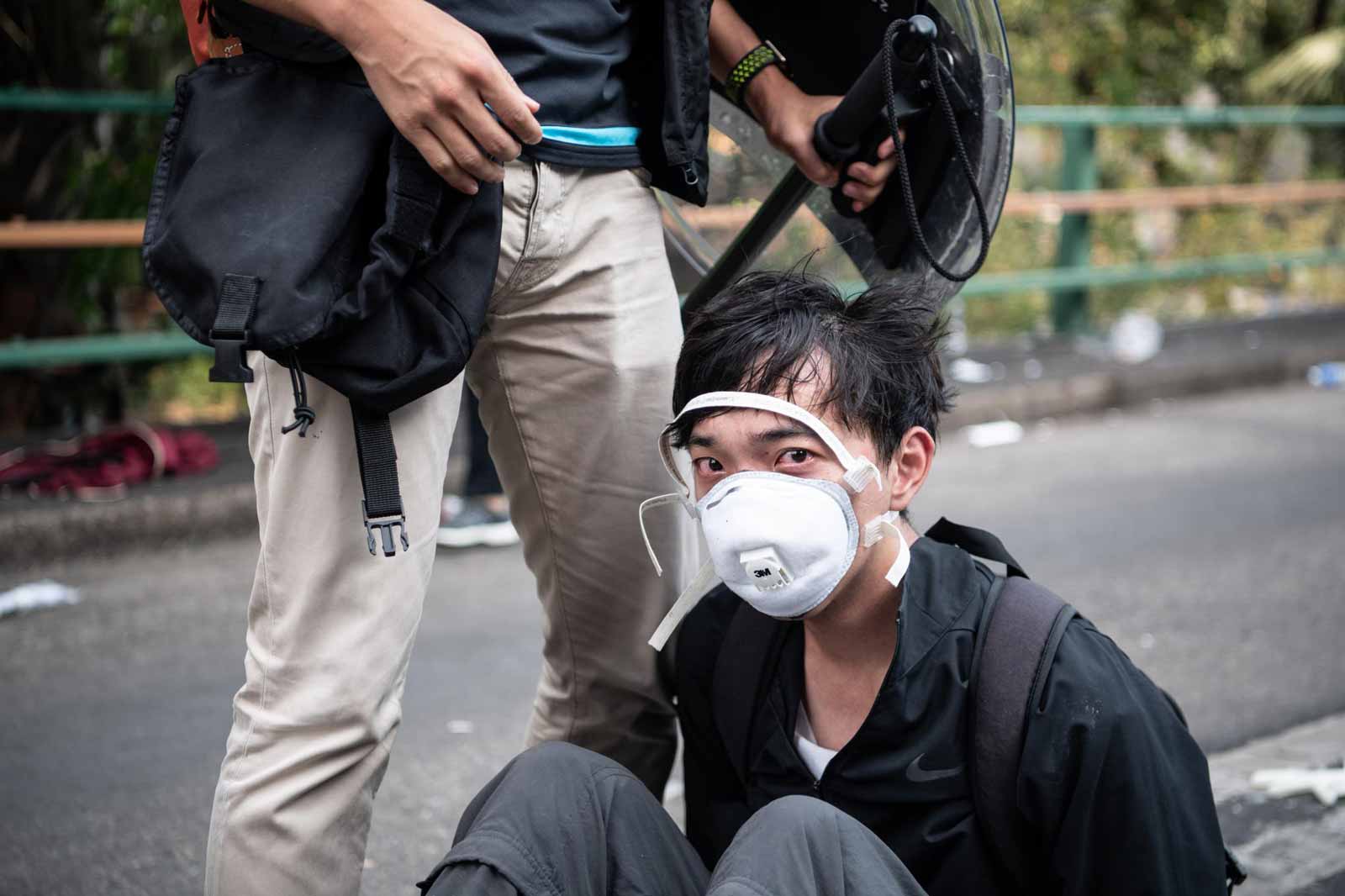
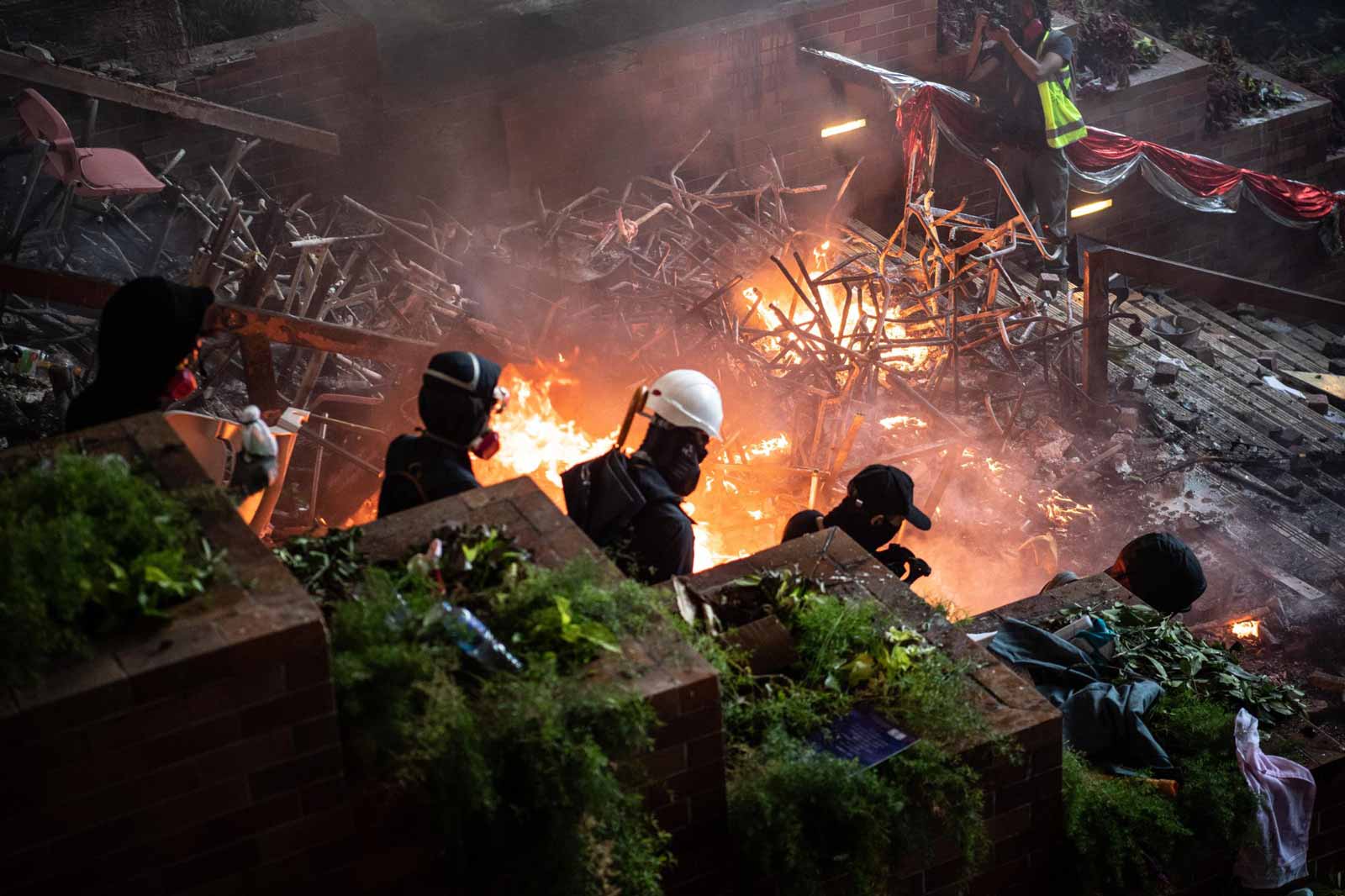
I think there were only a couple times where I really had to ask myself what risks I was willing to take, or whether the image was worth it. One time was inside PolyU, the university campus that was besieged by the police, when the protesters set the entrances on fire and everyone was trapped inside – that was scary (but the fires were eventually put out). The other times were when triads – Hong Kong’s organized crime syndicates – were involved, because they’re essentially above the law, are willing and able to seriously hurt people, and will target pro-democracy protesters and journalists.
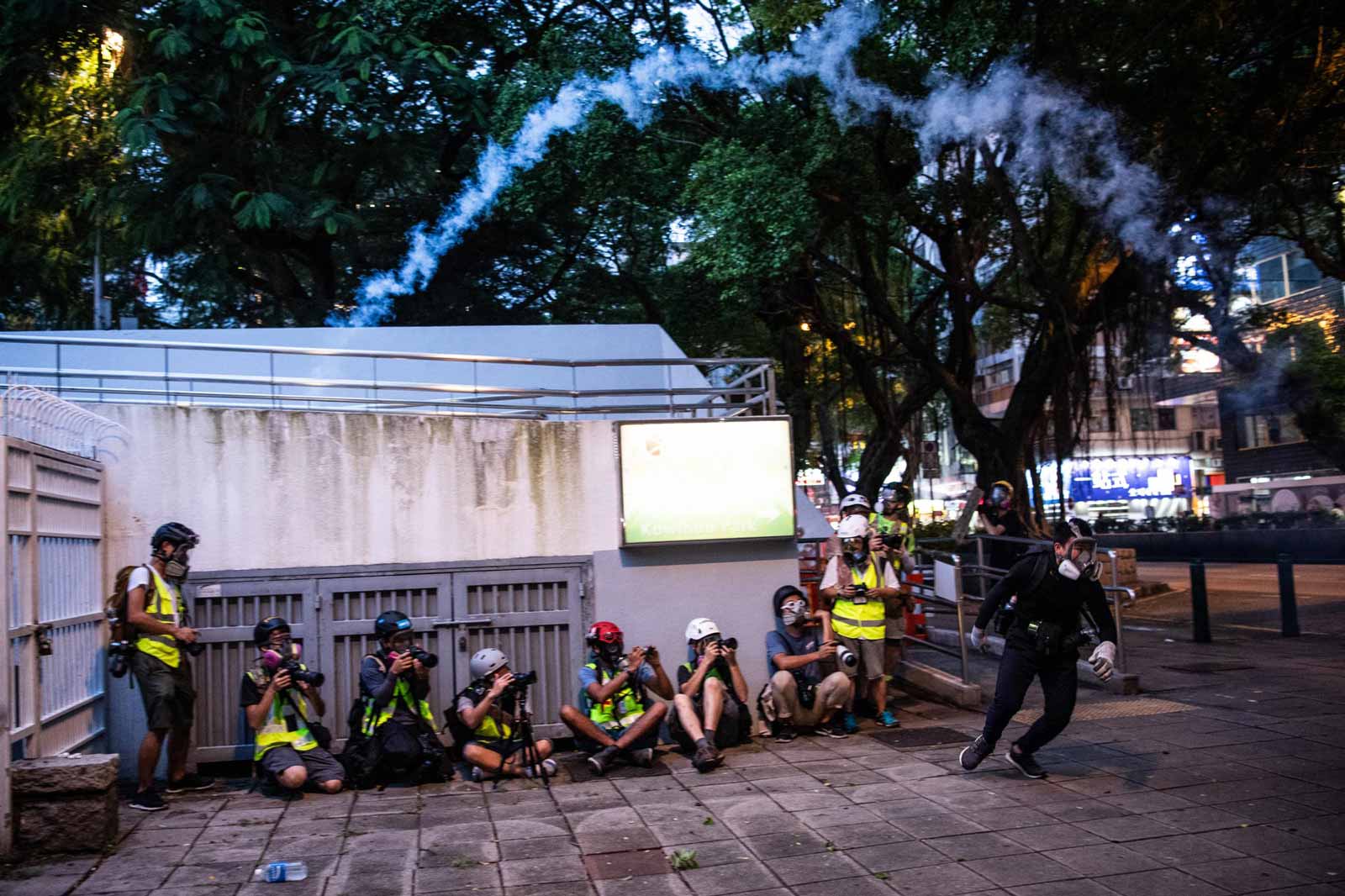
How do you feel about the fact that the same event is often covered from the same vantage point by half a dozen photographers? It introduces a strange element of competitiveness – combined with the obvious solidarity.
I actually enjoy it a lot! It’s such a unique learning opportunity – I can go home and see almost immediately how other more talented and more experienced photographers covered the exact same event, and see what they got that I didn’t even think of. It pushes me to be better, to work harder, and to be more creative.
Is this kind of ‘conflict photography’ about trying to get as close as possible to the action and finding an interesting vantage point? Do events basically dictate how close you can get and then using a wide or super-wide angle lens still allows you to get the context?
Safety first! You have to make a risk calculation based on personal safety and your own comfort zone. But I think one must also remember to think about different vantage points and that being in the thick of things – which can be tempting for any photographer attracted to covering these kinds of events – is not necessarily going to give you the best image.
How do your cover a day of protest? Do you take thousands of photos? If so, how do you deal with the question of selection? What is your workflow?
Hundreds or thousands, for sure! If I’m working for a wire, then I’ll be taking breaks to send selects back. If not, I’ll keep shooting and try to make selects as soon as I get home or, if I’m too tired, the next day. I try not to leave it too long though. I’ll ingest and make selects through Photo Mechanic, import into Lightroom and process the images, and export JPGs from Lightroom. If I need to add captions or send via FTP, I’ll open them back in Photo Mechanic.
When you’re looking through your images at the end of the day, are there ones that “just” tell the story and ones that may not “make it” journalistically but are your personal favourites?
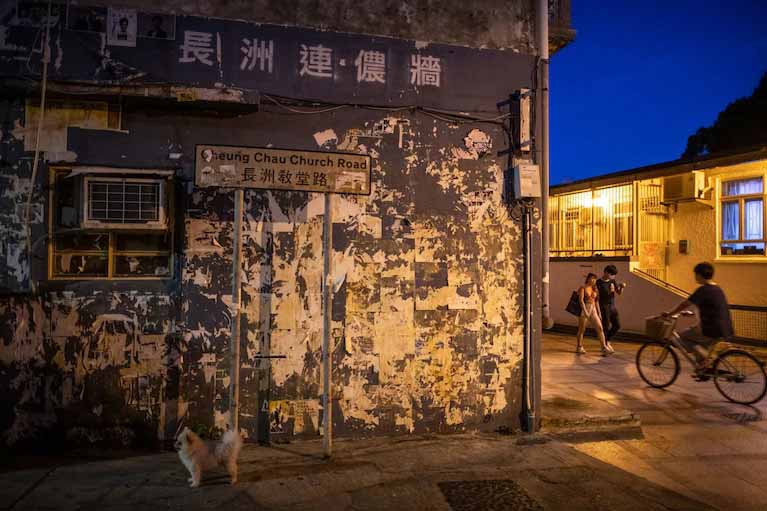
I think it’s the details that aren’t as “loud” or “obvious” – graffiti, stickers, protest gear – that sometimes get a bit less attention but that represent a bit more emotional or symbolic meaning.
I have only been doing photography at peaceful marches, demonstrations. I always imagine photographers like yourself as soldiers (these days you even have to be dressed like them to protect yourselves). Do you feel like someone on a mission when you’re shooting an event like this?
I feel like I’m preparing for a big rugby match or a big hike! I have to take care of my body and make sure that my recovery, sleep, and nutrition are on point. There’s a lot of adrenaline and it takes time to relax and calm down from that – I’m often up for hours after coming home even when it’s in the middle of the night.
You also write your stories. How do you see words as opposed to images? Complementary role? Do you tell using words what you images couldn’t capture?
I think every medium has its strengths and limitations, and I think there’s a unique perspective you can give when you tell a story in a dual role as a photographer and a writer – I can both show and tell. Photographs convey what I saw but I use writing to convey what I felt, or to explain the context that you simply couldn’t show through photography. That said, it’s very difficult to do both properly, depending on the type of story. If it’s a news story, then it’s absolutely better to have both a reporter and a photographer. But whenever possible, I always insist on being given as much time as it would take two separate people to do it.
Something that I feel I need to ask: current ‘conflict’ photographers (demonstrations, riots, protests) tend not to use black-and-white. Is there a practical reason (people want colour, you wouldn’t get paid for b&w) or aesthetics also (nighttime colours, colour smoke, fire)?
I was never a black-and-white photographer, and never even tried (except when I first learned film photography in high school). I appreciate the beauty of black-and-white photography but I prefer the raw immediacy of representing colour as it is.
How do you feel about the pressure of immediacy and presenting your work on social media? Is writing a creative process that allows you to slow down a bit? Or are delivery deadlines with current events so fast that the time for introspection comes only later?
Social media gives me a space to just be me to whoever is interested in what I have to say or show, without the pressure of delivering to an editor on a deadline. It’s a space where I can express myself and process my own thoughts and feelings, where I can reach regular people with information in a way that traditional media might not.
How do you protect yourself from burning out creatively?
A leadership coach for National Geographic, Lisa Witter, always reminds people to “protect your asset”. You are your asset. You have to make sure you’re taken care of, otherwise you can’t do your work. I try to maintain a balanced life and make sure I have time for the things or people I enjoy and love. I try to set aside time to watch documentaries, films, or talks to challenge myself creatively and be exposed to new ideas. I try to read a lot.
Slideshow of Laurel’s Photos
Soundtrack is from a live slam poetry performance by MC Yan: Hong Kong Slam Jam. (Follow the link to watch it with English subtitles.)
We use cookies to ensure that we give you the best experience on our website. If you continue to use this site we will assume that you are happy with it.