Life beyond the kit zoom lens
- György
- June 20, 2017
- Easy reading, Gear, Lenses, Photography
So, you’ve been using your cropped sensor (APS-C) Canon or Nikon DSLR for a while. It came with the 18-55mm standard zoom. But you’ve grown and now you know: if you truly want to enjoy photography you simply have to move beyond the kit zoom lens that came with your camera.
The 18-55mm focal length range is quite alright for most of our everyday photography needs (group shots, landscapes, portraits), but the aperture limitation is very restrictive. Having a largest aperture somewhere between f/3.5 and f/5.6 is simply not enough for low-light photography and producing the shallow depth-of-field that we all love.
One of the most frequent questions I hear from my beginners is “What lens should I get next?” I usually answer “It depends on the kind of photography you’re interested in and your budget.”
Here are my recommendations for a few relatively inexpensive solutions. Again, keep in mind, that although some of these lenses are made for full frame cameras, this article is written with cropped sensor cameras in mind. (If you’d like a quick introduction to what this ‘crop’ and the so-called ‘crop factor’ mean, read this article.)
Large Aperture in a Compact Body
PRIME LENSES
CANON PRIMES
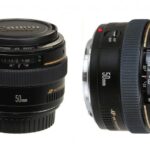
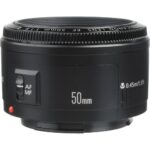
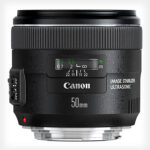
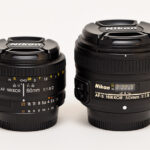
The most affordable lens on the planet is the 50mm, f/1.8 prime. It’s a no-brainer. Currently priced around £65-75 there’s not much to think about. Owners of full frame Canon cameras like the 5D or the 6D can also enjoy these lenses as the images they create cover the area of the physically larger sensor.
In the Canon lens ecosystem lenses called EF (and bearing a red dot towards the back of the barrel) are made for full frame sensors. EF-S lenses (sporting a white rectangle) are made for cropped sensors.
If you have a bit more to spend you can go for the 50mm, f/1.4 version. Is it better? Yes, it is. Is it more expensive? Of course it is. (Currently about £220-280.)
Once you’ve fallen in love with primes, you might want to get your hands on other Canon lenses like the 35mm, f/2 (the ‘standard’ lens unless you have a full frame camera), the 24mm, f/2.8 (a versatile lens much preferred by street photographers) or the 28mm, f/1.8. Check your latest prices and consider them an investment. (These lenses are also EF lenses, so they will also fit full frame Canon cameras.)
Canon 24mm – 28mm – 35mm primes
NIKON PRIMES
Nikon lenses are beautiful creatures but the denominations can be a bit overwhelming. You have to be aware of one important ‘letter’ that’s always written on the lens. Nikon lenses come in two flavours: G and D. They could be essentially the same and the optical quality can be identical. The difference?
G lenses do not have a manual aperture ring and their autofocus is compatible with all currently available Nikon cameras.
D lenses have a manual aperture ring and their autofocus is not compatible with every camera. This means that while the lenses will perfectly fit on any Nikon camera, AF will not work on all models. It will definitely not work on the otherwise very popular D3xxx and D5xxx series.
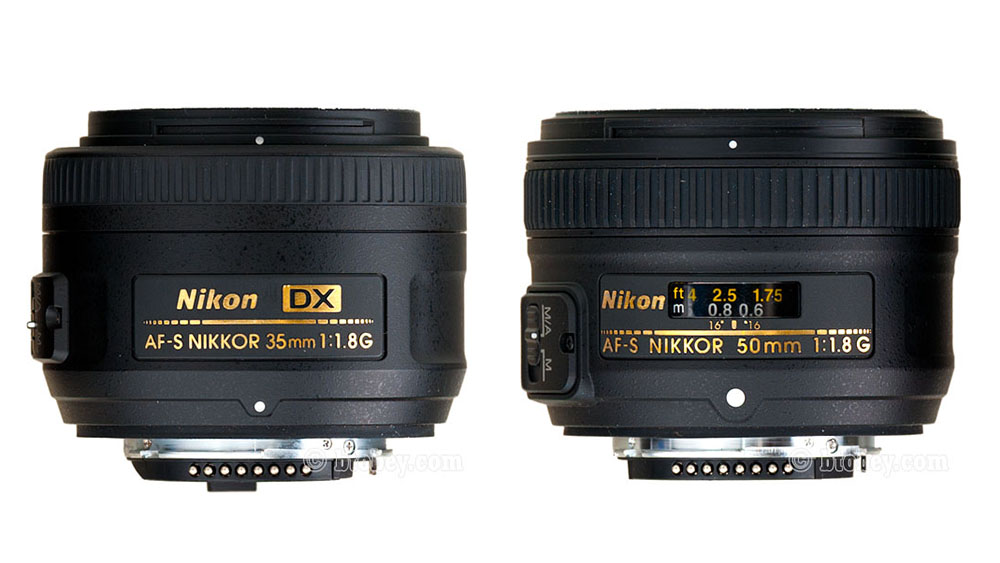
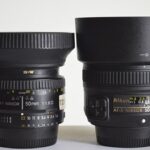
Keeping this in mind, you may want to acquire either the 50mm, f/1.8 G or D lens. The former is a bit more expensive (currently around £135), the latter is somewhat cheaper (going for £80-90).
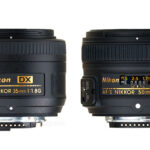
If you are looking for something a bit wider, there is always the 35mm, f/1.8 G lens. Its price is basically the same as that of its 50mm sibling.
Which one to go for if you can only have one of them? The 50mm lens will be great for portraits and close-ups, the 35mm is a bit wider, you’ll be able to fit more into the frame. To make up your mind use your kit zoom as a guide.
Flexibility that Comes at a Price
ZOOM LENSES
If you prefer the versatility of a zoom lens, I recommend that you get a zoom similar in range to the kit lens but with an aperture that allows you to shoot in low light without having to push your ISO up too much. And that means f/2.8.
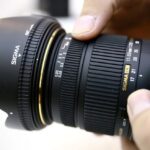
The budget option means going for a third-party lens. Sigma, Tamron, Tokina all make very fine lenses.
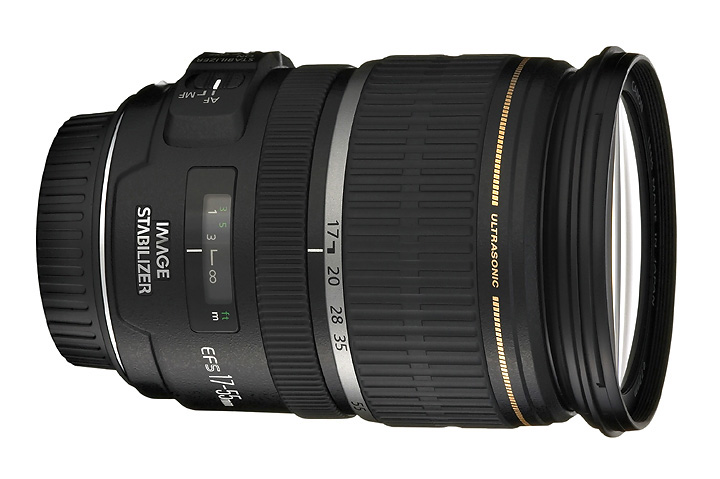
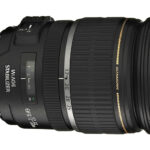
If you have a bigger budget, you might want to get the Canon or the Nikon version of these lenses. Buying a new lens is like buying a new car, so off the shelf the Canon 17-55mm, f/2.8 zoom will make your wallet £525-580 lighter, the astonishingly awesome Nikon 17-55mm, f/2.8 zoom, depending on the vendor anywhere between £860-1050.
The hefty price tag is not a marketing trick, these lenses are awesome. If you haven’t been good enough to ask Santa for these lenses and your birthday is still long months away I’d recommend getting them second-hand. Lenses are an investment (in case you need an argument to justify the purchase for yourself or your Significant Other), if you take good care of them they will last decades and will make even your grandchildren happy.
- 24mm, 35mm, 40mm, 50mm, Canon, cropped sensor, EF, EF-S, full-frame, lens