
Frame rates, shutter speed and the ‘film look’
- György
- January 5, 2021
- Video
What is the film look?
There are few film-related concepts in circulation as annoying as the urban legend of the ‘FILM LOOK’. There is no ‘film look’.
There are films that engage you as a viewer and films that don’t. There are no magical settings that will get you this mysterious Holy Grail of DSLR and mirrorless shooters.
There are, however, a few creative characteristics that many people associate with the films they once used to enjoy in movie theatres. A lot of the time people referring to the ‘film look’ are, in fact, talking about FRAME RATE, the related SHUTTER SPEED and resulting MOTION BLUR.
And that is all about tradition.
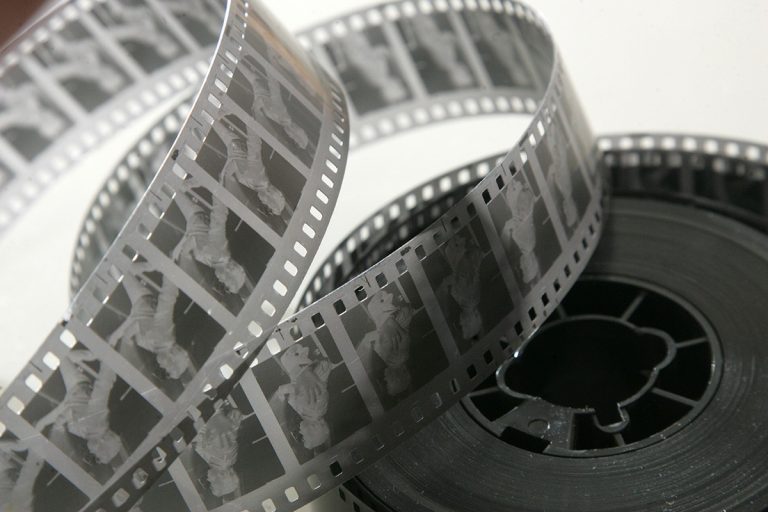
Traditionally, films used to be shot on, well, on film.
Many still are!
That is, on something that you can actually touch. Still frames shot one after the other so when it’s projected the illusion of motion is created.
Before the world arrived at its first truly global frame rate of 24 frames per second (fps), various companies and inventors experimented with many other frame rates. Most traditional silent films, e.g. were shot at 16 fps.
However, for most of film’s history films were shot at a speed of 24 frames per second. There are many solid technical, physiological and financial reasons for this. For the purposes of our discussion it’s enough to accept that the gold standard used to be 24 fps with two very specific consequences.
One is related to SHUTTER SPEED the other to MOTION BLUR.
SHUTTER SPEED defines how long a single frame is exposed for. MOTION BLUR describes how movement gets blurred as a result of the shutter speed. You all know from photography how a fast shutter speed of e.g. 1/2000th of a second is great for freezing action (sports, wildlife) and how a slow shutter speed of e.g. 1/4th of a second will result in lots of motion blur.
Tip: Read more and see a detailed camera test about motion blur in the second part of this article by clicking here.
Traditional film cameras used to have a ROTATING DISC SHUTTER. The following animation is a good illustration of what it looks like.
The fundamental principle is that the disc is actually a half-a-disc. As it rotates light is able to get through half the time (when it’s not there) and is blocked the other half (when it’s there).
If you shoot 24 frames per second this means that each frame could theoretically stand still in your camera for 1/24th of a second. Waiting to be exposed. And then move on in literally no time to give way to the next still that needs to get exposed.
Sadly, that’s impossible. The negative needs time to move on so that the next frame could get in front of the film gate and stand still to be exposed.
This is what the rotating disc enables. The film is exposed for one half its rotation and then incoming light is blocked for the other half – during which the film can be moved. What is half of 1/24th of a second?
1/48th of a second
And this is the standard shutter speed of probably every single movie that you have ever seen in a movie theatre! (Before they were all digitised.)
A slightly more generic statement of the same fact is that the standard shutter speed for any shooting frequency is half the frame rate.
24 fps means a shutter speed of 1/48th of a second.
25 fps means a shutter speed of 1/50th of a second.
30 fps means a shutter speed of 1/60th of a second.
Look at the following short excerpt from Birdman (2014, directed by Alejandro G. Iñárritu). When you’re watching it in motion, your brain is happy with what it perceives. But if we pause any given frame, the amount of motion blur is maddening. Yet all the films you watch “look” like this!
BIRDMAN (2014), DIR. ALEJANDRO G. IÑÁRRITU
You don’t ‘see’ motion blur until you freeze a frame
The amount of MOTION BLUR created by a shutter speed of 1/48th of a second is what our eyes have gotten used to. It is actually quite a substantial amount. As a still photographer, I would do my best not to shoot a portrait at this relatively slow shutter speed as anything but a perfectly still subject would get a bit blurry. Yet all the films I shoot use this shutter speed!
Over the decades this amount of motion blur has become a ‘natural’ attribute of motion pictures. It’s tradition. (And as many traditions, it may change in the future.)
And this is a major part of what many call the ‘film look’.
So, you want to grab your cinematic Holy Grail? Set your shutter speed to 1/48th of a second. Or 1/50th on your DSLRs, which is rooted in a related tradition but will give you exactly the same amount of motion blur.
p.s.: whether your standard shutter speed is 1/48th, 1/50 or 1/60 is purely a function of your frame rate (24 fps, 25 fps or 30 fps). The difference in the amount of motion blur all these shutter speeds produce is virtually imperceptible to the average human viewer. So no, you don’t have to shoot at 24 fps to achieve the ‘film look’.


