Depth-of-field

Depth-of-field and focusing

To understand depth-of-field you first need to understand what focusing with a lens means. You can only focus a lens at one distance at a time. Try this: hold up your hand in front of one eye, spread your fingers wide, close the other eye and focus on your index finger. Now focus on what’s between your fingers in the background.

Your eye will only focus only on one of these – never both at the same time. A photographic lens behaves the same way. If you set your focusing distance at 5 feet then it’s objects at that subject distance that will be completely sharp. Objects at 6 feet (and at 4 feet) will be less sharp. At 10 feet and 2 feet even less sharp. At 1 foot and 1000 feet objects might become completely blurred.

Sharpness is not an On/Off switch. It’s a matter of degree, a continuum. Things can be “not razor sharp”, “perhaps a bit soft”, “rather blurry” or “completely out of focus”. Depth-of-field is the measure of the space in front of and behind your in-focus subject that is acceptably sharp.

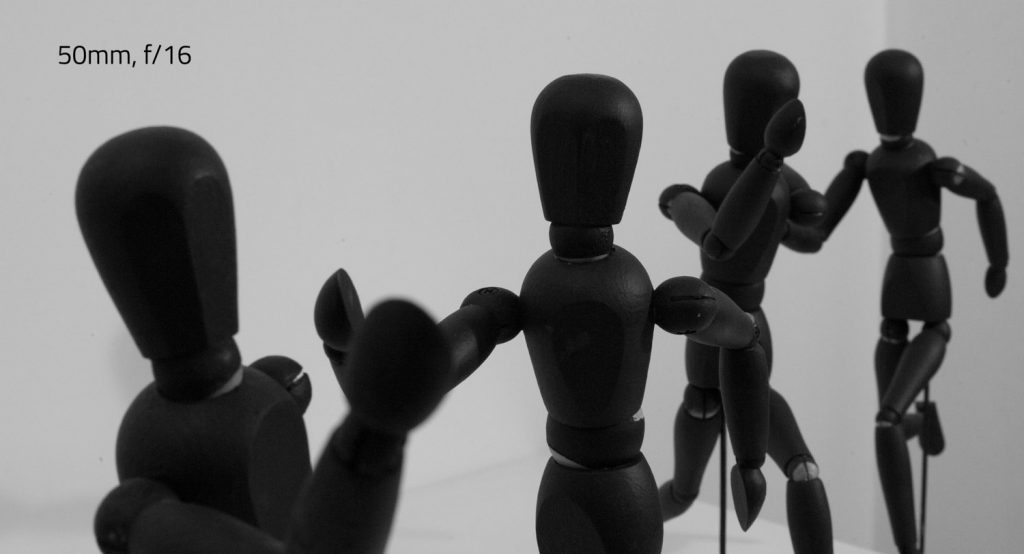
50mm, f/16
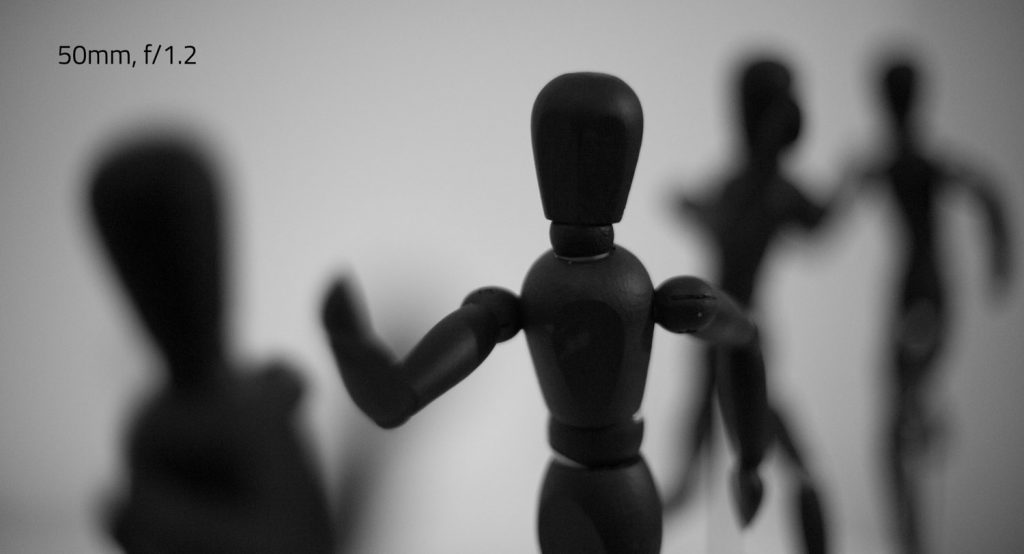
50mm, f/1.2
Move the slider left and right to see the drastic change in DEPTH-of-field (DOF) between f/1.2 and f/16.

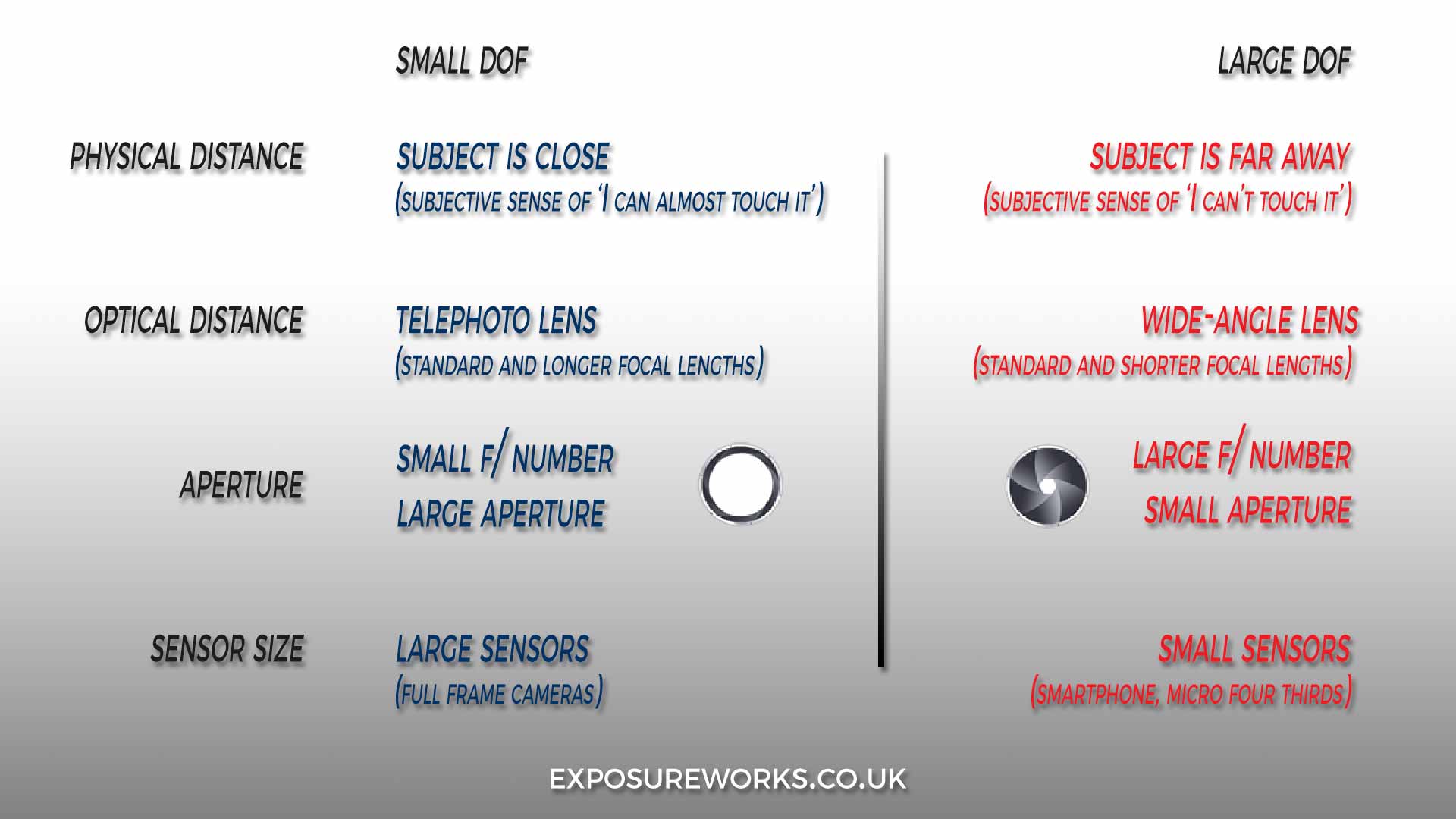
The Four variables of DOF

Depth-of-field (DOF) depends on four variables, no more, no less. Some of them are intuitive, you will go “but, of course, I knew that!” once I tell you about them. Others are less so.

What is, however, not obvious when you start out is how these four factors interact with each other.

The four variables are:

  1. Aperture
  2. Subject distance
  3. Optical distance (focal length)
  4. Sensor size

1. Aperture

Your lens is your camera’s eye, the aperture is its pupil.

The larger the aperture (the smaller the f/stop number is), the smaller the depth-of-field.

If you’re ever in doubt, relax: the largest aperture that your lens has is engraved on it. A large aperture size is good news: on the technical side, it means that your lens is capable of letting in lots of light, enabling you to do low-light photography. And as for the creative aspect: a large aperture allows you to take pictures with shallow DOF where the foreground and the background of your picture are clearly separated from each other by large amounts of blur.

Small apertures (the higher f/stop numbers), on the other hand, increase DOF. Use them to have more or most of your scene in focus.

A simple (non-scientific) way to remember what the aperture does:

Large aperture = Lots of blur

Small aperture = Little blur

An alternative way to remember it (in case you want to concentrate on your aperture numbers):

Small number = Small depth-of-field

Large number = Large depth-of-field

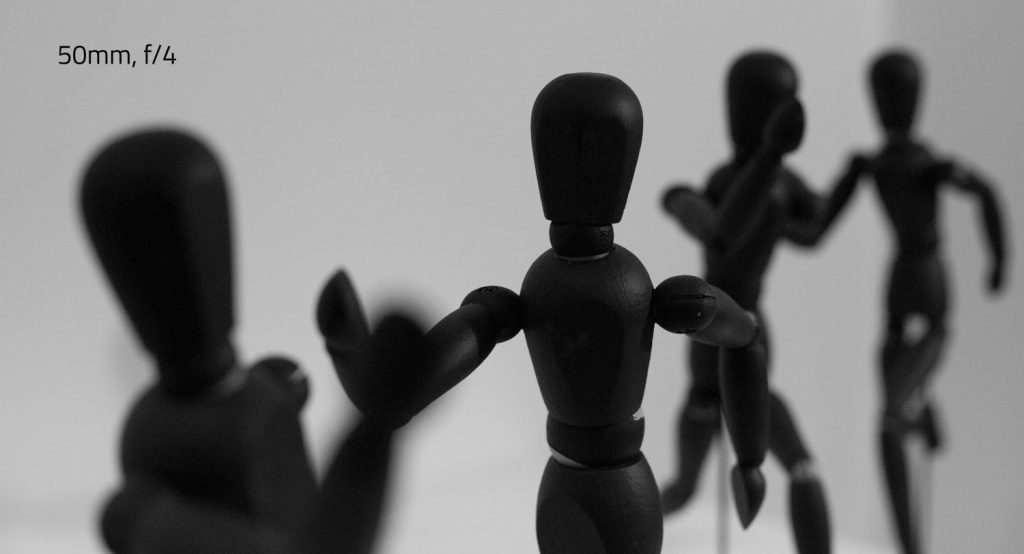
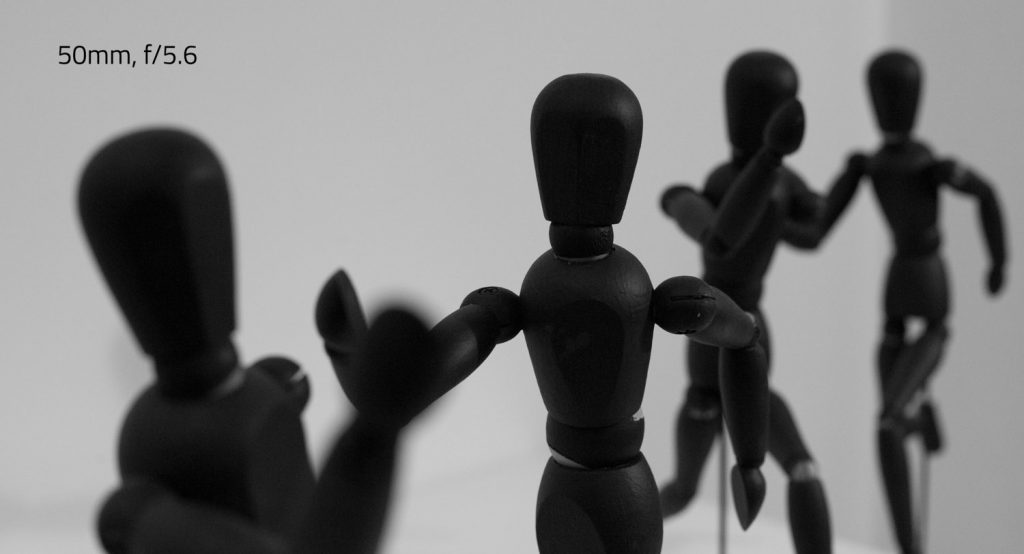
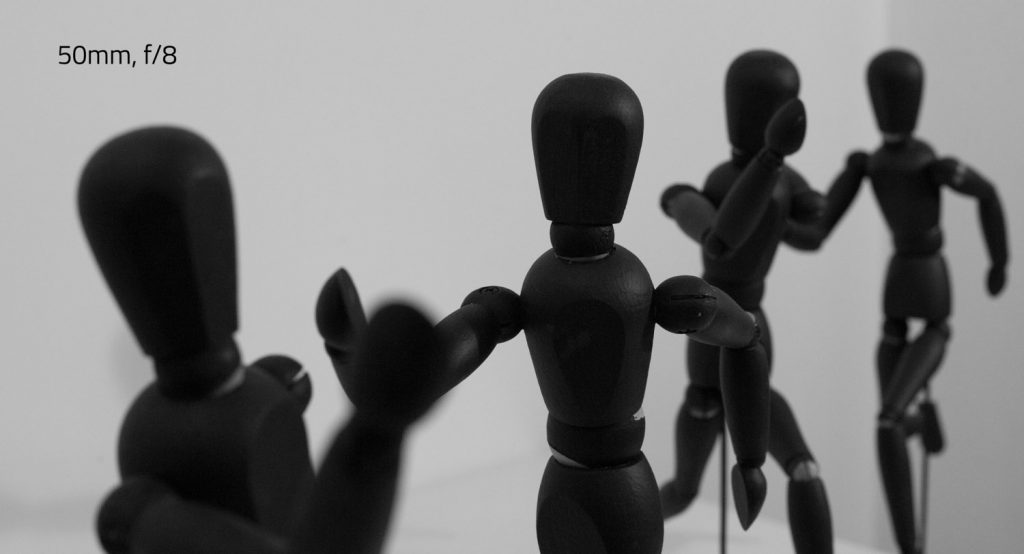
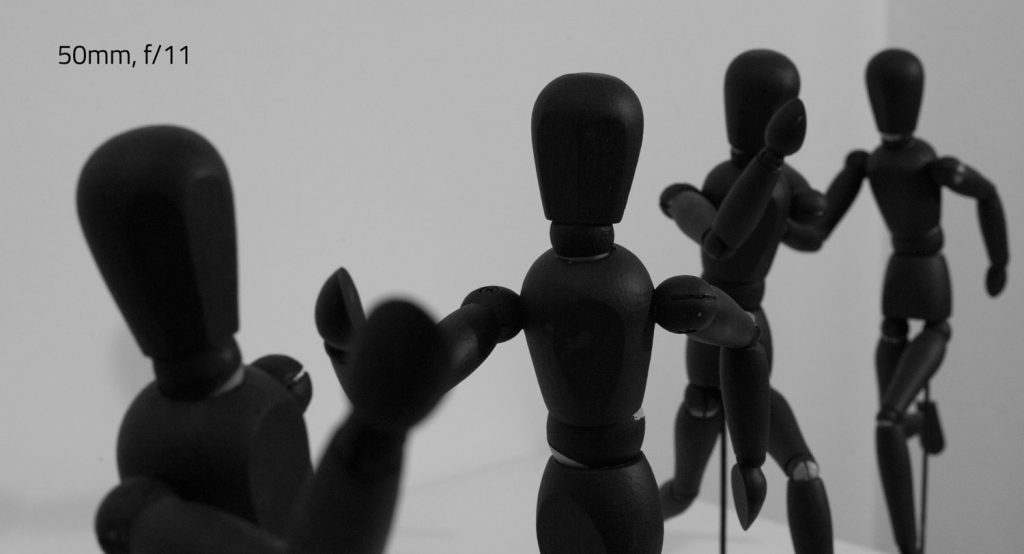
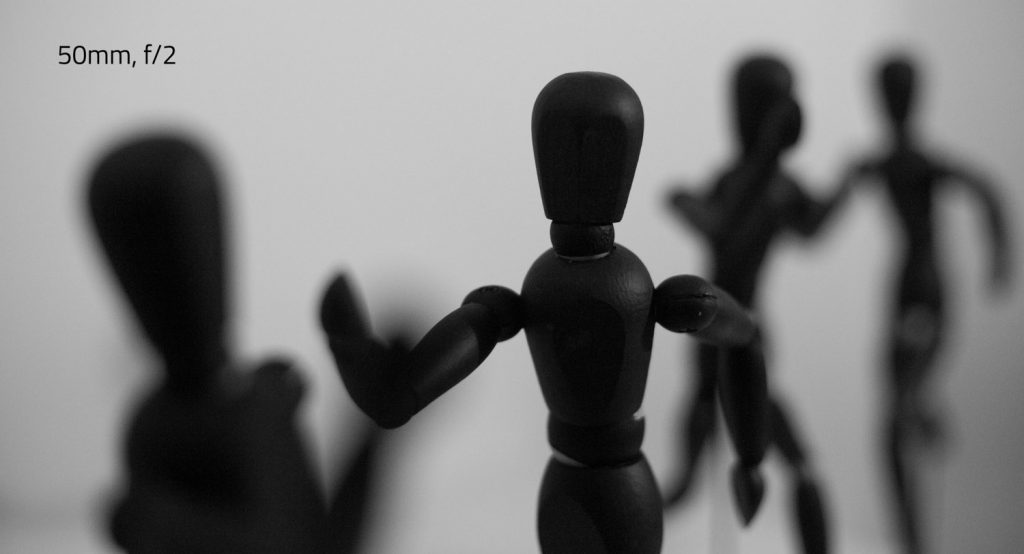
Here are a few images to illustrate this. Watch how depth-of-field increases as the aperture becomes physically smaller and smaller. At the beginning DOF is so extremely shallow that out-of-focus elements of the image can hardly be seen. As DOF increases they gradually ‘reappear’ and come into focus.

And here are the same images as a movie slideshow.

2. Subject distance

The second major variable of DOF is subject distance. When you focus on an object that’s close to you, DOF becomes very small. When you focus on a distant object, DOF is large. Just remember: for your ‘normal’ focal lengths (24-35-50mm lenses) close means indeed close: 3-5 feet or even an arm’s length. A subject that’s 6 feet from you is, in this photographic sense, already far away.

As photographers we have two ways of moving close to or away from our subjects. We can do it physically or optically by zooming in or out. The two are not the same but for our purposes they are very similar.

3. OPTICAL DISTANCE (Focal Length)

So, a wide-angle lens that you’d typically use for landscape or architecture photography will, by its very ‘nature’ gives you large depth-of-field. When you use such a lens, objects appear much smaller in your viewfinder than to the naked eye. In other words: you are optically very ‘far’ away from them.

A long telephoto lens that you’d use for wildlife or sports photography does exactly the opposite. The very purpose of its long focal length is to give you lots of magnification, to ‘bring’ distant objects closer to you. As these objects will appear to be close to you, DOF is small.

4. Sensor size

The final variable is subject distance. The smaller the sensor, the larger the DOF. The larger the sensor, the smaller the DOF.

Have you ever wondered why almost all your images taken with a smartphone are sharp? It’s because they have a very tiny sensor (and are typically equipped with a wide-angle lens).

Save and print this cheat card to remind yourself of the four variables